
-
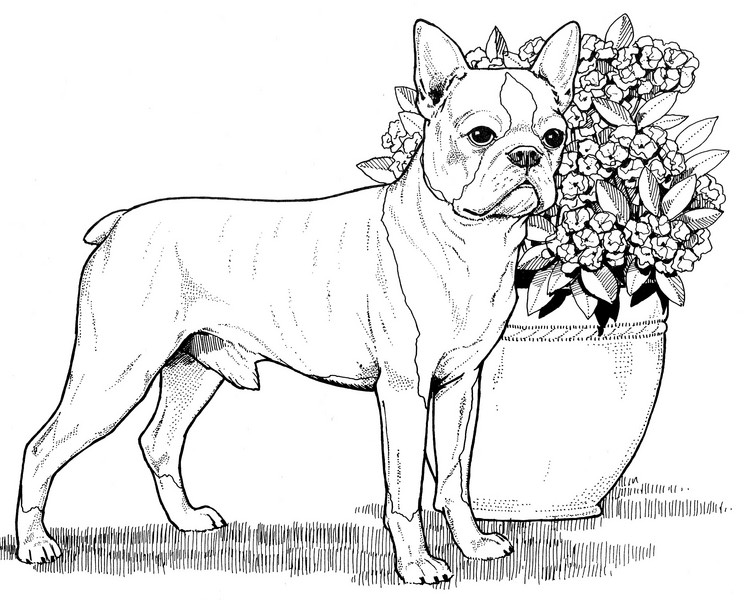
Coloring Page Boston Terrier
-
Research Identifies How Stress Triggers Drug Relapse
Recent research from Brown University could pave the way for new methods of treatment for those recovering from addiction. Researchers identified an exact brain region in rats where the neural steps leading to drug relapse take place, allowing them to block a crucial step in the process that leads to stress-induced relapse.

Prior research has established that acute stress can lead to drug abuse in vulnerable individuals and increase the risk of relapse in recovering addicts. But the exact way that stress triggers the neural processes leading to relapse is still not clearly understood. The Brown study provides new insights on how stress triggers drug abuse, and could lead to more effective treatments for addiction.
According to the study, stress has significant effects on plasticity of the synapses on dopamine neurons in the ventral tegmental area (VTA), the brain region where the neural activities leading to a stress-induced drug relapse take place.
Stress activates kappa opioid receptors (KORs) in the VTA, and the researchers found that by blocking the KORs, they could prevent the rats from relapsing to cocaine use while under stress.Published this week in the journal Neuron, the study shows blocking these receptors may be a critical step in preventing stress-related drug relapses in humans, as well. The chemical used to block the receptor, “nor-BMI,” may eventually be tested on humans, according to the study’s authors.
“If we understand how kappa opioid receptor antagonists are interfering with the reinstatement of drug seeking we can target that process,” senior study author Julie Kauer said in a statement. “We’re at the point of coming to understand the processes and possible therapeutic targets. Remarkably, this has worked.”
Kauer noted that the study builds upon over a decade of research on how changes in brain synapses relate to behaviors like addiction. The advance is significant, and could accelerate progress towards a medication for those struggling to recover from addiction.
“If we can figure out how not only stress, but the whole system works, then we’ll potentially have a way to tune it down in a person who needs that,” Kauer said.
-
Debunking misconceptions around addiction
Michael Bierer, MD, addiction specialist and assistant professor of medicine at Harvard Medical School, discusses the misconceptions around all types of addiction.
-
Healing with art
Gripping a cane to stabilize his stride, Bradley Books walked past the Firehouse Arts Center in Longmont, promising himself that one day his paintings and drawings would hang on the white walls.
Now four years later, the 37-year-old is inside on a weekly basis, without his cane, and facilitating a monthly program, Art of Possibility, which helps developmentally-disabled participants heal through artistic expression.
“My favorite is they always ask, ‘When are we coming back?’ And to know that’s how they feel, that then encourages me to keep working with it,” he said.
The program is two-fold because working with others also helps Books restore mentally and physically from pain that sometimes still paralyzes his mind and body. MORE HERE
-
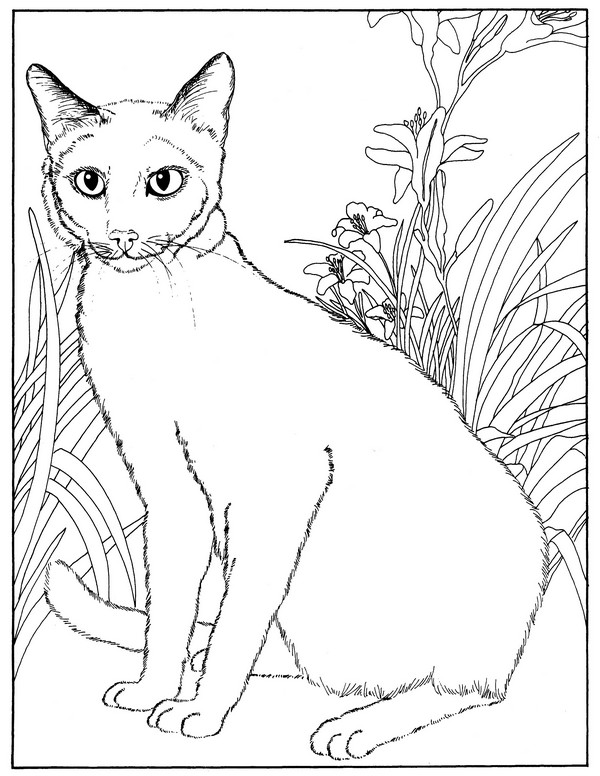
Coloring Page Russian Blue Cat
-
Rough Road/Path photos
I have been involved in facilitating groups for decades. One of the tools I use for groups of adults, teens, or children are photos. I use photos as a way for folks to become familiar and used to talking and sharing in a group. As a way to indirectly share something of themselves by talking about an image/photo. As a way to begin a conversation about larger issues or deeper issues.
One set of photos I use are Rough Road/Path photos with alcohol addicts and heroin addicts in the beginning of recovery. I spread the photos out on a table and ask the group (usually 10 to 15 men) to pick out one photo that represents their journey in the week or weeks before they came into rehab. Once everyone has chosen a photo I ask them to (one at a time) hold up the photo, describe the photo and why they chose it. The descriptions and stories they tell come from them, their experiences and begin the process of revealing a bit about their lives.


-
The science of improving your brain’s creativity | Nick Skillicorn
-
sharing
I am struck by how sharing our weakness and difficulties is more nourishing to others than sharing our qualities and successes. Jean Vanier

-
Problem solving
Characteristics that typically distinguish insight from “noninsight” solutions, people feel stuck before insight strikes; they can’t explain how they solved the problem and might say they were not even thinking about it; the solution appears suddenly and is immediately seen as correct. But are the neural processes involved in arriving at a solution through insight actually distinct from those related to more mundane problem-solving?
Recent findings suggest that people think about solutions, at an unconscious level, prior to solving insight problems, and that the right cerebral hemisphere (RH) appears to be preferentially involved. Jung-Beeman et al. predicted that a particular region of the RH, called the anterior superior temporal gyrus (aSTG), is likely involved in insight because it seems critical for tasks that require recognizing broad associative semantic relationships—exactly the type of process that could facilitate reinterpretation of problems and lead to insight.

Problem-solving involves a complex cortical network to encode, retrieve, and evaluate information, but these results show that solving verbal problems with insight requires at least one additional component. Further, the fact that the effect occurred in RH aSTG suggests what that process may be: integration of distantly related information. Distinct neural processes, the authors conclude, underlie the sudden flash of insight that allows people to “see connections that previously eluded them.”
-
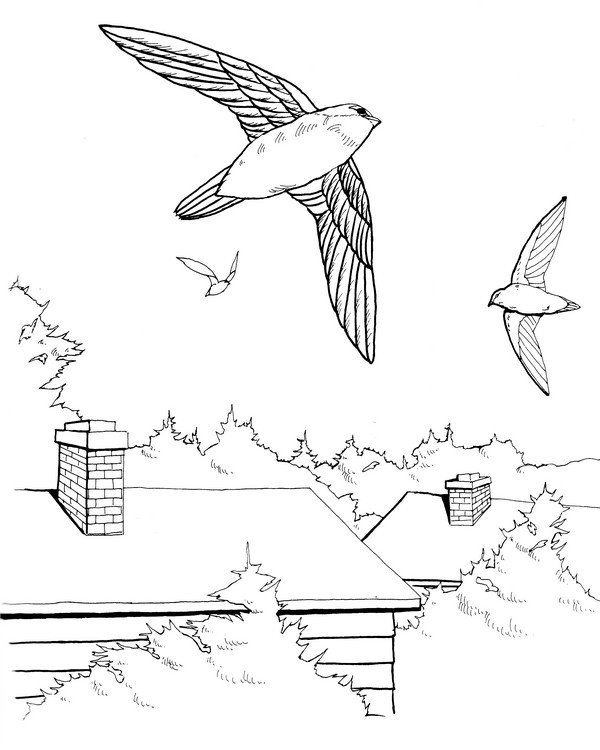
Coloring Page Chimney Swift


 CreativeTherapyTools