
-
Yoga may boost your brain power
Yogis may be enjoying a surprising benefit when they unroll their mats and strike a pose. A new study finds that just 20 minutes of hatha yoga stimulates brain function.
Researchers from the University of Illinois at Urbana-Champaign enlisted 30 subjects to take tests of working memory and inhibitory control, two measures of brain function associated with the ability to focus, retain, and use new information, the researchers said.
Subjects who took a single, 20-minute yoga session were significantly faster and more accurate on their tests than subjects who walked or jogged on a treadmill for 20 minutes.
Participants on the treadmill exercised with the goal of maintaining 60 to 70 percent of their maximum heart rate throughout the exercise session. “This range was chosen to replicate previous findings that have shown improved cognitive performance in response to this intensity,” the researchers said.
“Yoga is an ancient Indian science and way of life that includes not only physical movements and postures but also regulated breathing and meditation,” said study lead Neha Gothe. “The practice involves an active attentional or mindfulness component but its potential benefits have not been thoroughly explored.”
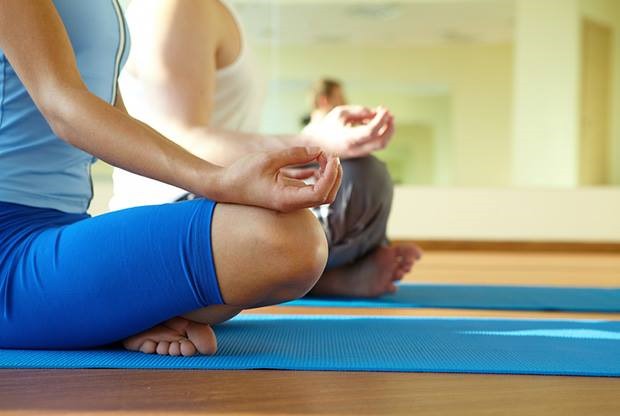
Subjects who practiced yoga performed a 20-minute sequence of seated, standing, and supine yoga postures, with the class ending in a meditative posture and deep breathing.
“It appears that following yoga practice, the participants were better able to focus their mental resources, process information quickly, more accurately and also learn, hold and update pieces of information more effectively than after performing an aerobic exercise bout,” Gothe said.
“The breathing and meditative exercises aim at calming the mind and body and keeping distracting thoughts away while you focus on your body, posture or breath,” she said. “Maybe these processes translate beyond yoga practice when you try to perform mental tasks or day-to-day activities.”
Findings, announced June 5, appear in the Journal of Physical Activity and Health.
A separate study published last month finds that twice-weekly yoga sessions can reduce high blood pressure. In the study, researchers led by Dr. Debbie Cohen of the University of Pennsylvania tracked 58 women and men, aged 38 to 62, for 24 weeks.Another study published earlier this year in the journal Frontiers in Psychiatry found that the practice may soothe depression and help sleep problems.
Read more:A 20-minute yoga session may boost your brain power – The Denver Post
-
Heavy marijuana use may harm the brain
New NIDA-funded research shows that heavy marijuana use (at least four times per week over the past six months) is linked to adverse changes in the function and structure of brain areas associated with reward, decision making, and motivation. Heavy marijuana use can also enhance some brain circuits – possibly to compensate for reduced function in specific brain regions. This effect was more pronounced in those who started using at a young age, indicating that developing brains are particularly vulnerable to marijuana’s effects.

Although further long-term studies are needed to determine whether marijuana caused these effects, these scientific findings add to the growing literature showing that heavy marijuana use may harm the brain.
For a copy of the abstract (published online November 10), go to www.pnas.org/content/early/2014/11/05/1415297111.abstract.
-
Coloring Page Chartreux Cat

-
Secondhand marijuana smoke
People who are exposed to secondhand marijuana smoke may feel a bit of the “high” that comes with using the drug, a new study finds. They may also feel unable to think clearly, and they may even have detectable levels of the drug in their urine or blood. But all of this happens only if they are exposed to marijuana smoke under severely unventilated conditions, the study found.
“If you’re going to breathe in enough passive cannabis smoke to feel high and potentially be slightly impaired, you could fail a drug test,” said Evan S. Herrmann, the study’s lead author and postdoctoral fellow in psychiatry and behavioral sciences at Johns Hopkins School of Medicine. “But this only happens under a very extreme situation.”

Cannabis is the world’s most commonly used illicit drug. It is often smoked in small, enclosed spaces with poor ventilation, according to the study.
Studies in the 1980s showed that such “social exposure” to pot smoke could trigger positive drug tests for cannabis’ main psychoactive ingredient, tetrahydrocannabinol (THC). But such studies had several limitations. They used marijuana that had much lower potency than the pot available today and they failed to account for normal levels of ventilation in rooms. They also did not examine how people may feel or behave after such exposures.
“This new study probes a question people have been wondering forever,” said Ziva Cooper, an assistant professor of clinical neurobiology at Columbia University, who was not involved in this research. “Do people actually get high from these ‘hot box’ effects? And if so, does it change your capabilities or cause you to fail a drug test?”
In the first study of its kind, Herrmann’s team recruited about 20 healthy people between the ages of 18 and 45, including some who smoked marijuana and some who didn’t use the drug. The researchers tested the participants’ blood, saliva, urine and hair samples for cannabis biomarkers, and then asked six smokers and six nonsmokers to relax in a Plexiglas and aluminum smoke chamber about the size of a dorm room. Participants underwent two separate sessions, each an hour long.
The researchers gave each of the six smokers 10 marijuana cigarettes, each containing 1 gram of high-potency weed, and instructed them to smoke at their leisure for the hour while the six non-smokers sat by their side in the chamber.
During one test session, the room’s ventilation system was switched on, allowing air to flow in and out at a standard office-building rate. In the other session, the researchers restricted the airflow in the chamber. After the 60 minutes, each participant completed a series of biological, cognitive and subjective surveys and tasks at regular intervals for up to 34 hours after exposure. [11 Odd Facts About Marijuana]

“Our results are pretty consistent with what we expected,” Herrmann said. The new findings confirm “it’s really hard to get a positive [drug test result] from passive smoke unless you’re in an extreme scenario,” he said.
Under the unventilated, “hot box” condition, the nonsmokers showed slight impairments on cognitive tests, reported feeling high, and had detectable levels of THC in their blood and urine for up to 22 hours post-exposure. Those in the ventilated condition had much lower levels of THC in their blood, did not feel impaired or high, and did not test positive for THC in their urine.
But the unventilated room is not representative of most real-life situations, the researchers said. “We modeled the worst-case scenario,” Herrmann said. “You are in an enclosed room for an hour with 15 grams of cannabis being smoked.”
Ideally, the study would have had a placebo group, in which nonsmokers were exposed to smoke without THC. This would have helped the researchers determine whether the feeling of being high was due to the marijuana or simply a placebo effect, from being exposed to smoke.
Still, “this study is really important because it adds to our limited knowledge of the direct effects of cannabis smoking and the potential dangers of second-hand smoke,” Cooper said.
Follow Live Science @livescience, Facebook & Google+. Originally published on Live Science.
-
Our own History – #MayaAngelou
History, despite its wrenching pain, cannot be unlived, however, if faced with courage, need not be lived again. Maya Angelou

-
Anxiety
We all know the uncomfortable feeling of anxiety. Our hearts race, our fingers sweat, and our breathing gets shallow and labored. We experience racing thoughts about a perceived threat we fear will be too much to handle. That’s because our “fight or flight” response has kicked in, resulting in sympathetic arousal and a narrowing of attention and focus on avoiding the threat. We seem to be locked in that state, unable to focus on our daily chores or longer-term goals. Below are six strategies that you can use to help relieve your everyday anxiety:- Reevaluate the probability of the threatening event actually happening.
Anxiety makes us feel that a threat is imminent, yet most of the time what we worry most about never happens. By recording our worries—and how few actually came true—we can notice how much we overestimate the prospect of negative events.- De-catastrophize.
Even if a bad event happened, we may still be able to handle it by using coping skills and problem-solving abilities or by enlisting others to help. Although not pleasant, we could still survive encountering a spider, having a panic attack, or losing money. It’s important to realize that very few things are the end of the world.- Use deep breathing and relaxation.
By deliberately relaxing our muscles we begin to calm down so we can think clearly. If you practice this at first without a threat present, it can start to become automatic and will be easier to use in the moment when you face a threat. Deep breathing engages the parasympathetic nervous system to put the brakes on sympathetic arousal.- Become mindful of your own physical and mental reactions.
The skill of mindfulness involves calmly observing our own reactions, including fear, without panic or feeling compelled to act. It can be taught in therapy and improves with practice.- Accept fear and commit to living a life based on core values.
Acceptance and Commitment Therapy (ACT) is an approach that encourages people to accept the inevitability of negative thoughts and feelings and not try to repress or control them. By directing attention away from the fear and back onto life tasks and valued goals, we can live a full life despite the fear.- Exposure.
Exposure is the most powerful technique for anxiety and it involves facing what we fear and staying in the situation long enough for the fear to habituate or go down, as it naturally does. Fear makes us avoid or run away, so our minds and bodies never learn that much of what we fear is not truly dangerous. -
Coloring Page Goddess Bastet

-
patterns
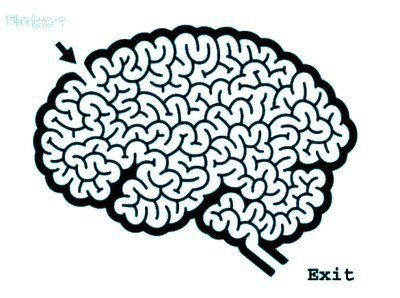
Creativity involves breaking out of established patterns in order to look at things in a different way. – Edward de Bono
-
Mindfulness with Jon Kabat-Zinn
-
Walking and creativity
When the task at hand requires some imagination, taking a walk may lead to more creative thinking than sitting, according to research published by the American Psychological Association.
“Many people anecdotally claim they do their best thinking when walking,” said Marily Oppezzo, PhD, of Santa Clara University. “With this study, we finally may be taking a step or two toward discovering why.”
While at Stanford University’s Graduate School of Education, Oppezzo and colleague Daniel L. Schwartz, PhD, conducted studies involving 176 people, mostly college students. They found that those who walked instead of sitting or being pushed in a wheelchair consistently gave more creative responses on tests commonly used to measure creative thinking, such as thinking of alternate uses for common objects and coming up with original analogies to capture complex ideas. When asked to solve problems with a single answer, however, the walkers fell slightly behind those who responded while sitting, according to the study published in APA’s Journal of Experimental Psychology: Learning, Memory and Cognition.
While previous research has shown that regular aerobic exercise may protect cognitive abilities, these researchers examined whether simply walking could temporarily improve some types of thinking, such as free-flowing thought compared to focused concentration. “Asking someone to take a 30-minute run to improve creativity at work would be an unpopular prescription for many people,” Schwartz said. “We wanted to see if a simple walk might lead to more free-flowing thoughts and more creativity.”
Of the students tested for creativity while walking, 100 percent came up with more creative ideas in one experiment, while 95 percent, 88 percent and 81 percent of the walker groups in the other experiments had more creative responses compared with when they were sitting. If a response was unique among all responses from the group, it was considered novel. Researchers also gauged a participant’s total number of responses and whether a response was feasible and appropriate to the constraints of the task. For example, “Putting lighter fluid in soup is novel, but it is not very appropriate,” Oppezzo said.
Marily Oppezzo, Daniel L. Schwartz. Give your ideas some legs: The positive effect of walking on creative thinking.. Journal of Experimental Psychology: Learning, Memory, and Cognition, 2014; DOI: 10.1037/a0036577

 CreativeTherapyTools