
-
Stanford Medicine: Mood Disorders Across the Lifespan
Dr. Katherine Williams, Director of Stanford’s Women’s Wellness Clinic, addresses Women’s Health Forum attendees on mood disorders in women.
-
Clients find healing, self-expression through restorative art program
Hung on the walls of the Sister Mary Alice Murphy Center for Hope, you can see — and even purchase — Jim Lucas’ saving grace.
The formerly homeless Fort Collins man is a recovering addict who has been clean for four years after a 15-year struggle with meth, his “drug of choice.” He hasn’t had a drink in 11 years. He found his way off the streets around the same time he became clean.

“Funny how that works out,” he said.
The struggle to go back to methamphetamine and substance abuse is always there, but Lucas, 53, has the best sober companion he could ask for: art. He’s one of around 15 artists participating in ArtSpe@k, a restorative art program at the Murphy Center in partnership with Front Range Community College’s community studio that encourages Murphy Center guests to tap into their creative side. For more click.
-
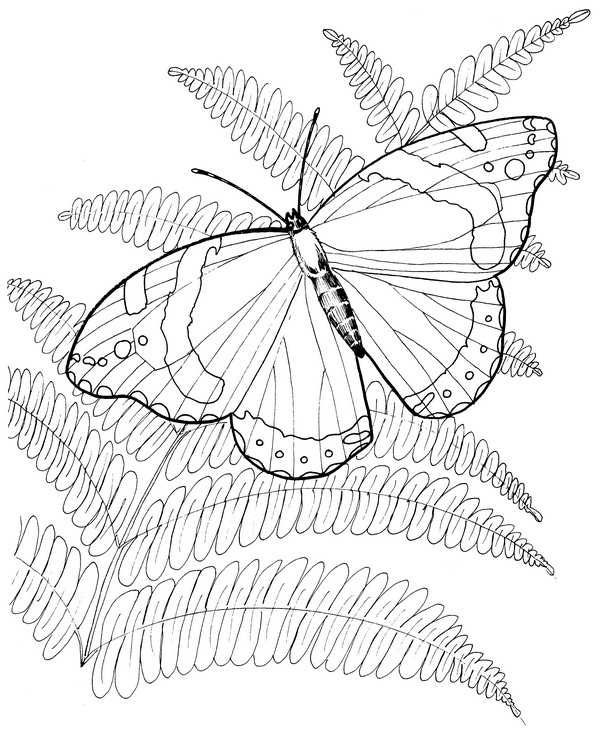
Red Admiral Coloring Page
-
devotion
Sogyal Rinpoche, “Real devotion is an unbroken receptivity to the truth. Real devotion is rooted in an awed and reverent gratitude, but one that is lucid, grounded, and intelligent.”

-
Happy Dogs !!

-
Gene expression changes with meditation
With evidence growing that meditation can have beneficial health effects, scientists have sought to understand how these practices physically affect the body.
A new study by researchers in Wisconsin, Spain, and France reports the first evidence of specific molecular changes in the body following a period of mindfulness meditation. The study investigated the effects of a day of intensive mindfulness practice in a group of experienced meditators, compared to a group of untrained control subjects who engaged in quiet non-meditative activities. After eight hours of mindfulness practice, the meditators showed a range of genetic and molecular differences, including altered levels of gene-regulating machinery and reduced levels of pro-inflammatory genes, which in turn correlated with faster physical recovery from a stressful situation.
“To the best of our knowledge, this is the first paper that shows rapid alterations in gene expression within subjects associated with mindfulness meditation practice,” says study author Richard J. Davidson, founder of the Center for Investigating Healthy Minds and the William James and Vilas Professor of Psychology and Psychiatry at the University of Wisconsin-Madison.
“Most interestingly, the changes were observed in genes that are the current targets of anti-inflammatory and analgesic drugs,” says Perla Kaliman, first author of the article and a researcher at the Institute of Biomedical Research of Barcelona, Spain (IIBB-CSIC-IDIBAPS), where the molecular analyses were conducted.
The study was published in the journal Psychoneuroendocrinology.
Mindfulness-based trainings have shown beneficial effects on inflammatory disorders in prior clinical studies. The new results provide a possible biological mechanism for therapeutic effects.
The results show a down-regulation of genes that have been implicated in inflammation. The affected genes include the pro-inflammatory genes RIPK2 and COX2 as well as several histone deacetylase (HDAC) genes, which regulate the activity of other genes epigenetically by removing a type of chemical tag. What’s more, the extent to which some of those genes were downregulated was associated with faster cortisol recovery to a social stress test involving an impromptu speech and tasks requiring mental calculations performed in front of an audience and video camera.
Perhaps surprisingly, the researchers say, there was no difference in the tested genes between the two groups of people at the start of the study. The observed effects were seen only in the meditators following mindfulness practice. In addition, several other DNA-modifying genes showed no differences between groups, suggesting that the mindfulness practice specifically affected certain regulatory pathways.
However, it is important to note that the study was not designed to distinguish any effects of long-term meditation training from those of a single day of practice. Instead, the key result is that meditators experienced genetic changes following mindfulness practice that were not seen in the non-meditating group after other quiet activities — an outcome providing proof of principle that mindfulness practice can lead to epigenetic alterations of the genome.
Previous studies in rodents and in people have shown dynamic epigenetic responses to physical stimuli such as stress, diet, or exercise within just a few hours.
“Our genes are quite dynamic in their expression and these results suggest that the calmness of our mind can actually have a potential influence on their expression,” Davidson says.
“The regulation of HDACs and inflammatory pathways may represent some of the mechanisms underlying the therapeutic potential of mindfulness-based interventions,” Kaliman says. “Our findings set the foundation for future studies to further assess meditation strategies for the treatment of chronic inflammatory conditions.”
Study funding came from National Center for Complementary and Alternative Medicine (grant number P01-AT004952) and grants from the Fetzer Institute, the John Templeton Foundation, and an anonymous donor to Davidson. The study was conducted at the Center for Investigating Healthy Minds at the UW-Madison Waisman Center.
Journal Reference:
Perla Kaliman, María Jesús Álvarez-López, Marta Cosín-Tomás, Melissa A. Rosenkranz, Antoine Lutz, Richard J. Davidson. Rapid changes in histone deacetylases and inflammatory gene expression in expert meditators.Psychoneuroendocrinology, 2014; 40: 96 DOI: 10.1016/j.psyneuen.2013.11.004
-
Cedar Waxwing Coloring Page

-
the mistakes of others
“You must learn from the mistakes of others. You can’t possibly live long enough to make them all yourself.” Sam Levenson

-
The mindful way through depression
-
TEDx:The Practice of Mindfulness
Former Buddhist nun Diana Winston is the director of Mindfulness Education at UCLA Mindful Awareness Center, and the author of several books on mindfulness and meditation. With more than 20 years in the study and practice of mindfulness, Diana explains how routinely taking the time to be in the moment can have a profound impact on our everyday lives and relationships.


 CreativeTherapyTools