
-
Cardinal-Coloring Page

-
our food
Mother Nature clearly intended for us to get our food from the “patty” group, which includes hamburgers, fish sticks, and McNuggets- foods that have had all of their organs safely removed. Dave Barry

Photo by Valeria Boltneva on Pexels.com
-
Happiness
Finding happiness in the everyday and mundane is a challenge and really easy, at the same time. It has to do with how you see yourself and world around you. Below is a panel discussion by ‘experts’, which is funny in itself.
2013 Stanford University Roundtable: Are You Happy Now?
Streamed live on Oct 18, 2013The talking starts at 13:00 minutes in. The science of happiness is a growing and intriguing field. Research about what truly makes people happy is not only surprising, but applicable no matter how much money we make or where we live. Join moderator Katie Couric and a panel of experts in psychology, business, neuroscience and design for a Roundtable discussion about the happiness and sense of wellbeing that elude so many, but are sought by all.
-
Alan Watts: Drugs & Addiction
-
Sparrow Hawk Coloring Page

-
allow us to realize
“Artists provide the contemporary metaphors that allow us to realize the transcendent, infinite, and abundant nature of being as it is.” Joseph Campbell
-
Relaxation
I started engaging in relaxation tools as a teenage in the mid 1070’s when I first started practicing Hatha and Raja Yoga. After 38 years I can say with confidence that it works for me. Since 1983 amongst other things I have taught Hatha Yoga, and relaxation techniques.
In the past 30 years, there has been considerable interest in the relaxation response and how inducing this state may benefit health. Research has focused primarily on illness and conditions in which stress may play a role either as the cause of the condition or as a factor that can make the condition worse.

Currently, there is some scientific evidence that relaxation techniques may be an effective part of an overall treatment plan for some disorders, including:
- Anxiety. Studies have suggested that relaxation may assist in the treatment of phobias or panic disorder. Relaxation techniques have also been used to relieve anxiety for people in stressful situations, such as when undergoing a medical procedure.
- Depression. In 2008, a major review of the evidence for relaxation in the treatment of depression found that relaxation techniques were more effective than no treatment for depression, but not as effective as cognitive-behavioral therapy.
- Headache. There is some evidence that biofeedback and other relaxation techniques may be helpful for relieving tension or migraine headaches. In some cases, these mind and body techniques were more effective than medications for reducing the frequency, intensity, and severity of headaches.
- Pain. Some studies have shown that relaxation techniques may help reduce abdominal and surgery pain.
Relaxation involves practice and willingness to fully engage in the process of relaxing. Stay tuned for some great relaxing tools.
-
Self-Affirmation Improves Problem-Solving
It’s no secret that stress increases your susceptibility to health problems, and it also impacts your ability to solve problems and be creative. But methods to prevent associated risks and effects have been less clear – until now.
Published in PLOS ONE, new research from Carnegie Mellon University provides the first evidence that self-affirmation can protect against the damaging effects of stress on problem-solving performance. Understanding that self-affirmation – the process of identifying and focusing on one’s most important values – boosts stressed individuals’ problem-solving abilities will help guide future research and the development of educational interventions.
“An emerging set of published studies suggest that a brief self-affirmation activity at the beginning of a school term can boost academic grade-point averages in underperforming kids at the end of the semester. This new work suggests a mechanism for these studies, showing self-affirmation effects on actual problem-solving performance under pressure,” said J. David Creswell, assistant professor of psychology in CMU’s Dietrich College of Humanities and Social Sciences.
Because previous research indicated that self-affirmation may be an effective stress management approach, Creswell and his research team had college students rank-order a set of values (e.g., art, business, family and friends) in terms of their personal importance, and indicate their levels of chronic stress. Participants randomly assigned to a self-affirmation condition were asked to write a couple of sentences about why their number one ranked value was important (a standard self-affirmation exercise). All participants then had to complete a challenging problem-solving task under time pressure, which required creativity in order to generate correct solutions.
The results showed that participants who were under high levels of chronic stress during the past month had impaired problem-solving performance. In fact, they solved about 50 percent fewer problems in the task. But notably, this effect was qualified by whether participants had an opportunity to first complete the self-affirmation activity. Specifically, a brief self-affirmation was effective in eliminating the deleterious effects of chronic stress on problem-solving performance, such that chronically stressed self-affirmed participants performed under pressure at the same level as participants with low chronic stress levels.
“People under high stress can foster better problem-solving simply by taking a moment beforehand to think about something that is important to them,” Creswell said. “It’s an easy-to-use and portable strategy you can roll out before you enter that high pressure performance situation. -
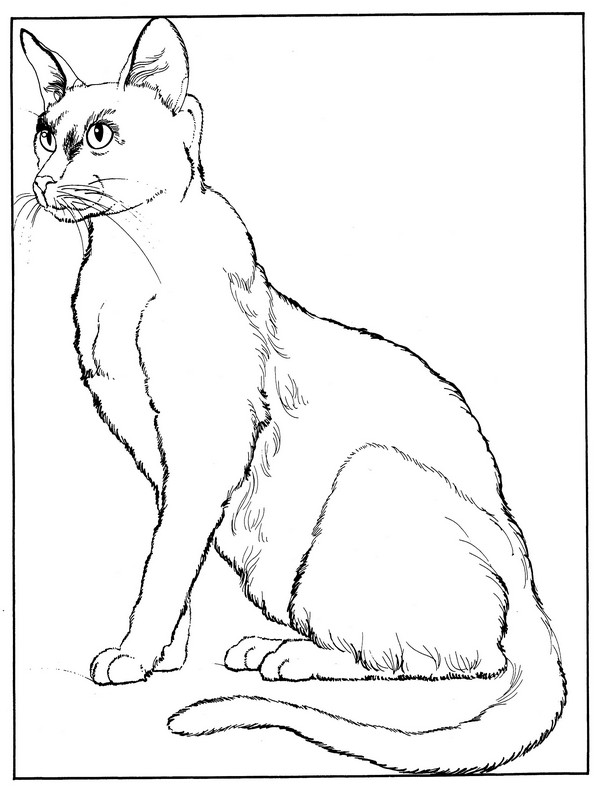
Havana Brown-Coloring Page
-
barren field
Hold fast to dreams For when dreams go Life is a barren field Frozen with snow. Langston Hughes




 CreativeTherapyTools