
-
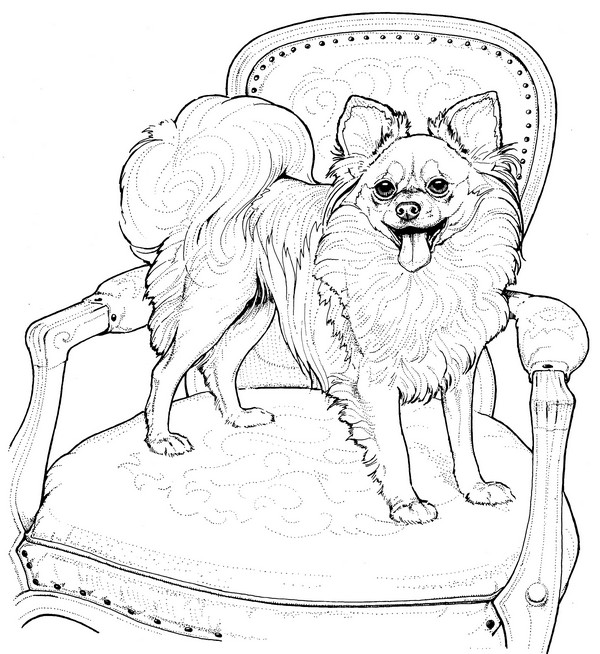
Papillon-Coloring Page
-
open to new
Our lives can be filled with creative moments, whatever we do, as long as we’re flexible and open to new possibilities—willing to push beyond routine. The everyday expression of creativity often takes the form of trying out a new approach to a familiar dilemma. Yet half the world still thinks of creativity as a mysterious quality that the other half has. Research suggests, however, that everyone is capable of tapping into his or her creative spirit. We don’t just mean getting better ideas; we’re talking about a kind of general awareness that leads to greater enjoyment of your work and the people in your life: a spirit that can improve collaboration and communication with others.

-
Mandala-Coloring Page

-
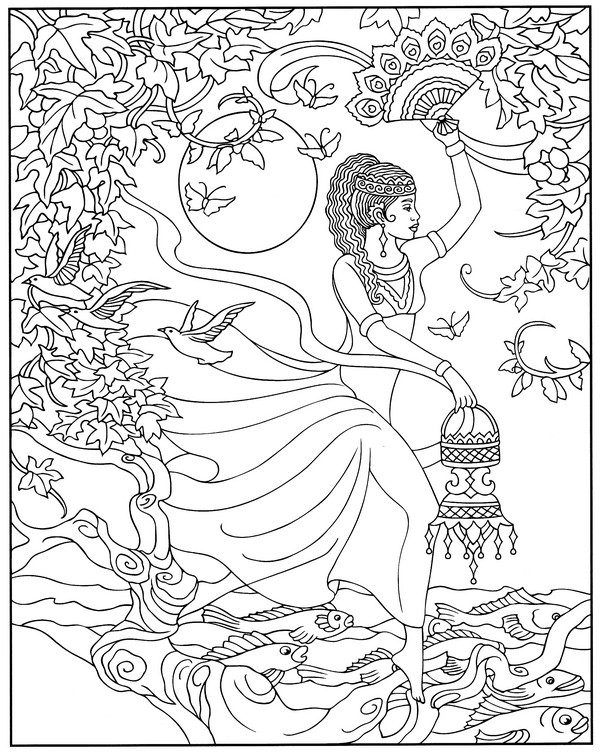
Oshun-Coloring Page
-
Different Cultures Enhances Creativity
Creativity can be enhanced by experiencing cultures different from one’s own, according to a study in Personality and Social Psychology Bulletin (published by SAGE).

Three studies looked at students who had lived abroad and those who hadn’t, testing them on different aspects of creativity. Relative to a control group, which hadn’t experienced a different culture, participants in the different culture group provided more evidence of creativity in various standard tests of the trait. Those results suggest that multicultural learning is a critical component of the adaptation process, acting as a creativity catalyst.
The researchers believe that the key to the enhanced creativity was related to the students’ open-minded approach in adapting to the new culture. In a global world, where more people are able to acquire multicultural experiences than ever before, this research indicates that living abroad can be even more beneficial than previously thought.
“Given the literature on structural changes in the brain that occur during intensive learning experiences, it would be worthwhile to explore whether neurological changes occur within the creative process during intensive foreign culture experiences,” write the authors, William W. Maddux, Hajo Adam, and Adam D. Galinsky. “That can help paint a more nuanced picture of how foreign culture experiences may not only enhance creativity but also, perhaps literally, as well as figuratively, broaden the mind.
The article “When in Rome… Learn Why the Romans Do What They Do: How Multicultural Learning Experiences Facilitate Creativity” in the June 2010 issue of Personality and Social Psychology Bulletin is available free for a limited time here.
Source: SAGE Publications -
creativity is courage
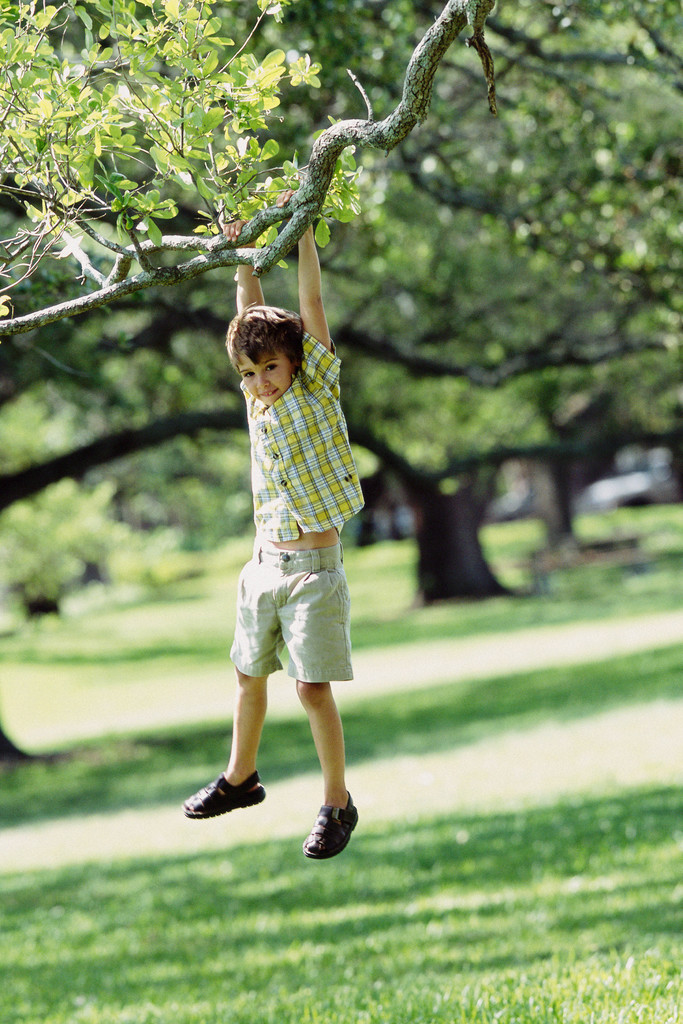
Another word for creativity is courage. George Prince
-
Wise, Reason, Emotional Mind
I have been practicing meditation since the mid-70’s and started a mindfulness meditation practice in the mid-90’s. Mindfulness has to do with the quality of awareness that we bring to what we are doing and experiencing, to being in the here and now. It has to do with learning to focus on being in the present, to focusing our attention on what we are doing and what is happening in the present.
Many of us are distracted by images, thoughts and feelings of the past, perhaps dissociating, worrying about the future, negative moods and anxieties about the present. It’s hard to put these thing away and concentrate on the task at hand.I started teaching mindfulness to patients a few years ago and often used the following as a hand out:
Mindfulness has to do with states of mind. Reason Mind, Emotion Mind, and Wise Mind. Reason Mind is your rational, thinking, logical mind. It plans and evaluates things logically. It is your “cool” part. Reasonable Mind can be very beneficial. It is easier to be in Reasonable Mind when you feel good. It is much harder to be in Reasonable Mind when you don’t feel good.You Would Use Your Reasonable Mind To:
Build a bridge
Figure out how to double a recipe
Balance your checkbook
Figure out the fastest way from point “A” to point “B”Emotion Mind describes times when emotions are what influence or control your thinking and behavior. Emotional Mind can also be very beneficial. Emotions are what motivate us to action. Emotions are what keep us attached to others and building relationships.
Emotion Mind can be aggravated by:
Illness, Lack Of Sleep, Tiredness, Drugs, Alcohol, Hungry, Overeating, Poor nutrition and/or lack of exercise, Environmental stress and threats, not taking your meds.Both Emotion and Reasonable Mind Are Equally Important And Valuable
Reasonable mind gives you a way to solve your problems.
Emotion mind gives you a reason (motivation) to want to solve them.
Wise Mind is the integration of emotional and reasonable mind. Wise mind is that part of each person that can know and experience truth. It is where the person knows something to be true or valid. It is where the person knows something in a centered (balanced) way. It is almost always quiet and calm in this part of the mind.
Everyone Has A Wise Mind!
Some people have simply never experienced it.
No one is in Wise Mind all of the time.
Wise Mind – An Analogy for Wise Mind is like a deep well in the ground. The water is at the bottom of the well. The entire underground is an ocean called Wise Mind. But on the way down, there are often trap doors that stop progress. Sometimes the trap doors are so cleverly built that you actually believe that there is no water at the bottom of the well. The trap door may look like the bottom of the well. Perhaps it is locked and you need a key. Perhaps it is nailed shut and you need a hammer. Perhaps it is glued shut and you need a chisel.
-
Red Tara

-
Dogbane Leaf Beetle

-
Smoking Weed = less Creativity
People sometimes think that smoking cannabis makes them more creative. However, research by Leiden psychologists Lorenza Colzato and Mikael Kowal shows that the opposite is true.
Strong cannabis doesn’t work
The findings show that cannabis with a high concentration of the psychoactive ingredient THC does not improve creativity. Smokers who ingested a low dose of THC, or none at all (they were given a placebo), performed best in the thinking tasks that the test candidates had to carry out. A high dose of THC was actually shown to have a negative effect on the ability to quickly come up with as many solutions as possible to a given problem.
Increased creativity is an illusion
The research findings contradict the claims of people who say that their thinking changes and becomes more original after smoking a joint. There’s no sign of any increased creativity in their actual performance, according to Colzato. ‘The improved creativity that they believe they experience is an illusion.’
Too much cannabis is counterproductive
Colzato said, ‘If you want to overcome writer’s block or any other creative gap, lighting up a joint isn’t the best solution. Smoking several joints one after the other can even be counterproductive to creative thinking.’
The research method
Colzato and her PhD candidate Kowal were the first researchers to study the effects of cannabis use on creative thinking. For ethical reasons, only cannabis users were selected for this study. The test candidates were divided into three groups of 18. One group was given cannabis with a high THC content (22 mg), the second group was given a low dose (5.5 mg) and the third group was given a placebo. The high dose was equivalent to three joints and the low dose was equal to a single joint. Obviously, none of the test candidates knew what they were being given; the cannabis was administered via a vaporizer. The test candidates then had to carry out cognitive tasks that were testing for two types of creative thinking:
- Divergent thinking: generating rapid solutions for a given problem, such as: “Think of as many uses as you can for a pen?”
- Convergent thinking: Finding the only right answer to a question, such as: “What is the link between the words ‘time’, ‘hair’ and ‘stretching’. (The answer is ‘long’.)
Mikael A. Kowal, Arno Hazekamp, Lorenza S. Colzato, Henk van Steenbergen, Nic J. A. van der Wee, Jeffrey Durieux, Meriem Manai, Bernhard Hommel. Cannabis and creativity: highly potent cannabis impairs divergent thinking in regular cannabis users. Psychopharmacology, 2014; DOI: 10.1007/s00213-014-3749-1


 CreativeTherapyTools