
-
Standford Med: Why We Get Fat: Diet Trends and Food Policy
-
What is Mindfulness?
What is Mindfulness?
Mindfulness is a concentrated state of awareness that can help us see and respond to situations with clarity and without getting carried away by emotions or the constant chatter in our heads. Mindfulness enables us to:
· Better manage tension and stress
· Enhance objectivity, mental focus
· Communicate and make decisions more effectively
· Improve productivity
· Quiet’s noise in the mind
Meditation
Meditation is the tool we use to cultivate mindfulness. With meditation, you intentionally pay attention to a particular object as a way to strengthen concentration. There are thousands of meditative techniques: Tai Chi, yoga, focusing on the breath and using a mantra are all examples. People often think that meditating “correctly” means clearing all thought from the mind. This is a myth. The mind never stops thinking – it’s when we get caught up in our thoughts that we lose mindfulness. By witnessing thoughts, allowing them to pass, and returning to your chosen object of focus, you can actually build the muscle of concentration. Think of meditation as a fitness routine for the mind.
Are there other benefits to mindfulness?
In addition to boosting brain power, numerous research studies have shown significant physical benefits including:
· Reduced blood pressure
· Lowered cholesterol levels
· Enhanced immune function
· Reduced headache, migraine, back pain
· Improved respiratory function
Mindfulness does not require a particular set of beliefs in order to learn and practice – it is a quality of mind, accessible and available to all.
Mindfulness allows us to live every moment fully without the filters of bias, judgment or emotional reaction.
Mindfulness helps the body cope with physical challenges such as headaches, back pain and even heart disease.
Mindfulness keeps us from reacting too quickly – it helps increase the gap between impulse and action.
-
Freya Coloring Page

-
Men and Depression
In my years f doing groups I have on occasion facilitated men only groups. One issue that comes up is depression. We all have bouts of sadness now and then and when those bouts of sadness interfere with our daily lives than we need to take a step in the direction of change. Below is a handout I often use, particularly with dual diagnosed men.
Symptoms of Depression
Not everyone who is depressed or manic experiences every symptom. Some people experience only a few; some people suffer many. The severity of symptoms varies among individuals and also over time.
· Persistent sad, anxious, or “empty” mood.
· Feelings of hopelessness or pessimism.
· Feelings of guilt, worthlessness, or helplessness.
· Loss of interest or pleasure in hobbies and activities that were once enjoyable
· Decreased energy, fatigue; feeling “slowed down.”
· Difficulty concentrating, remembering, or making decisions.
· Trouble sleeping, early-morning awakening, or oversleeping.
· Changes in appetite and/or weight.
· Thoughts of death or suicide, or suicide attempts.
· Restlessness or irritability.
· Persistent physical symptoms, such as headaches, digestive disorders, and chronic pain that do not respond to routine treatment.
Co-Occurrence of Depression with Other Illnesses
Depression can coexist with other illnesses. In such cases, it is important that the depression and each co-occurring illness be appropriately diagnosed and treated. Research has shown that anxiety disorders which include post-traumatic stress disorder (PTSD), obsessive-compulsive disorder, panic disorder, social phobia, and generalized anxiety disorder commonly accompany depression.
Substance use disorders (abuse or dependence) also frequently co-occur with depressive disorders. Research has revealed that people with drug and/or alcohol addiction are almost twice as likely to experience depression.
Depression has been found to occur at a higher rate among people who have other serious illnesses such as heart disease, stroke, cancer, HIV, diabetes, and Parkinson’s.
Causes of Depression
Very often, a combination of cognitive, genetic, and environmental factors is involved in the onset of depression. Modern brain-imaging technologies reveal that, in depression, neural circuits responsible for the regulation of moods, thinking, sleep, appetite, and behavior fail to function properly.
In some families, depressive disorders seem to occur generation after generation; however, they can also occur in people with no family history of these illnesses. Genetics research indicates that risk for depression results from the influence of specific multiple genes acting together with non-genetic factors.
Environmental factors such as trauma, loss of a loved one, a difficult relationship, financial problem, or any stressful change in life patterns, whether the change is unwelcome or desired, can trigger a depressive episode in vulnerable individuals. Once someone experiences a bout of depression later episodes of depression may occur without an obvious cause.
Men and Depression
Men are more likely than women to report alcohol and drug abuse or dependence in their lifetime; however, there is debate among researchers as to whether substance use is a “symptom” of underlying depression in men or a co-occurring condition that more commonly develops in men. Nevertheless, substance use can mask depression, making it harder to recognize depression as a separate illness that needs treatment.
Instead of acknowledging their feelings, asking for help, or seeking appropriate treatment, men may turn to alcohol or drugs when they are depressed, or become frustrated, discouraged, angry, irritable, and, sometimes, violently abusive. Some men deal with depression by throwing themselves compulsively into their work, attempting to hide their depression from themselves, family, and friends. Other men may respond to depression by engaging in reckless behavior, taking risks, and putting themselves in harm’s way.
How to Help Yourself if You Are Depressed
Depressive disorders can make one feel exhausted, worthless, helpless, and hopeless. It is important to realize that these negative views are part of the depression and do not accurately reflect the actual circumstances. Negative thinking fades as treatment begins to take effect. In the meantime:
- Engage in mild exercise. Go to a movie, a ballgame, or participate in religious, social, AA/NA meetings or other healthy activities.
- Set realistic goals and assume a reasonable amount of responsibility.
- Break large tasks into small ones, set some priorities, and what you can as you can.
- Try to be with other people and to confide in someone; it is usually better than being alone and secretive.
- Expect your mood to improve gradually, not immediately.
- Feeling better takes time. Often during treatment of depression, sleep and appetite will begin to improve before depressed mood lifts.
- Postpone important decisions. Before deciding to make a significant transition–change jobs, get married or divorced–discuss it with others who know you well and have a more objective view of your situation.
- Do not expect to ‘snap out of’ a depression. But do expect to feel a little better day-by-day.
- Remember, positive thinking will replace the negative thinking as your depression responds to treatment.
- Let your family and friends help you.
-
How art aided Andrew Marr’s recovery
“When I started to recover in hospital, one of my early frustrations was that I found I wanted to draw.
Drawing does for me what others find in meditation, prayer or gardening. It is my way of connecting to the world; it is not just making images but drinking in and praising what’s around me.
Returning to the world as I did after my stroke, you look at it with fresh eyes. You want to absorb all you see. That meant being able to draw again and art aided my recovery and charted it.” Read more: http://www.dailymail.co.uk/home/event/article-2442555/BBCs-Andrew-Marr-Knowing-I-able-draw-realise-I-going-OK.html#ixzz2gwenGqUy -
If you want
If you want to go fast, go alone. If you want to go far, go with others. African Proverb
-
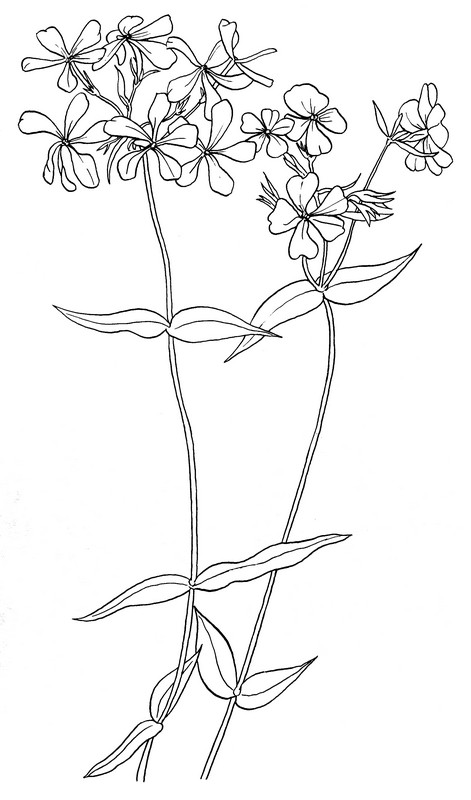
Blue Phlox Coloring Page
-
Recovery and addiction art project
In the next few days, the doors will appear in Reno NV.

A shadow figure is painted on a door from the Lear Theater as part of the art project, Doors to Recovery. The local artist created door represents the addiction and recovery process and will be on display at Junkee Clothing Exchange in Midtown throughout July as part of Artown.(Photo: Andy Barron/RGJ)
You will see them if you stop into city hall or when you’re grabbing a cup of coffee at Dreamer’s Coffee House in Midtown.
They will beckon for you to examine them. Take in their various colors, sculptures and depictions.
They might have you asking yourself, “What are these all about?”
The message can be found in the varying images, including shadows, walking shoes on a path, butterflies and blossoming trees: When one door closes on addiction, another opens to a new life and a second chance.
These are the Doors of Recovery.
The public art project, sponsored by Transforming Youth Recovery, will be on display in multiple locations in downtown and Midtown throughout July as part of Artown.
It will feature 38 local artist-created doors from the Lear Theater representing the transformation process from addiction to recovery. The goal of the project is to raise addiction and recovery awareness and celebrate the youth who are rebuilding their lives today, Transforming Youth Recovery’s Kate High said.
“The doors are brilliant and fantastic. A lot of the artists have experience — some personal, others with their families or loved ones — with addiction, or have lost people they’ve cared about,” High said. “There are a lot of feelings that went into them: ransformation, journey and metamorphosis from dark to light. The artists have all been excited to support a good cause — it is a problem and a disease and not someone’s choice when they started.”
Transforming Youth
A year ago, Stacie Mathewson’s son lost his battle to addiction.
Two years before that, while he was in recovery, she developed a growing interest in helping youth in recovery. She founded the Stacie Mathewson Foundation to raise addiction and recovery awareness and promote education in communities nationwide.
In 2013, she started Transforming Youth Recovery with the mission to “transform youth recovery — one community, one school, one student at a time.”
The organization currently is working to fund 100 collegiate recovery programs and funded the first collegiate pilot program at the University of Nevada, Reno — Nevada Recovery and Prevention (NRAP), High said.
She said in less than two years, Transforming Youth Recovery has tripled the number of collegiate recovery programs across the country, offering hundreds of students support they wouldn’t have otherwise had.
“The goal is to raise awareness of the nature of the disease and to celebrate young people in recovery,” High said. “We want to break stigma of the disease — it’s not a black mark against them — and encourage people to get into recovery. It’s hard and requires support, but it’s possible. Lives can be turned around. It’s the use that cause the behavior and not the person.”
NRAP student worker and member in recovery Jordan Fugate said she understands what it means to turn your life around. She said she was incarcerated at 21, and today, she’s in school, has her own car and is working with the recovery program to assist others in their recovery.
She said she wants to give hope to others.
“In college, alcohol is everywhere and it’s harder to be in recovery,” Fugate said. “But, you don’t have to wait until you hit rock bottom — or even need to be dealing with addiction — you can come connect and make friends, find support and be part of sober activities.”
NRAP currently has about 50 students and 12 core members, ranging from 18 years old to 33. While the main campus is located at UNR, there is also a part-time campus at Truckee Meadows Community College.
“NRAC is two years old, but a lot of people don’t know we’re around,” Fugate said. “This will help make
everyone aware that there are college support groups on the campuses. It’s benefiting those locally, and we wanted to be part of Doors to Recovery to make people aware.”
The program is open to students who are choosing to live a sober lifestyle. It offers peer and professional support, Alcoholic, Eating Disorders and Narcotics Anonymous programs, as well as wellness groups, a grief group and a sexual trauma support group.
“It’s a place to come hang out and meet people,” Fugate said. “This has helped me to live a college lifestyle sober. It’s difficult (for students) when there are bars around campus or casinos for events and restaurants. It might be more difficult to be sober in college in Reno. There is the 24-hour lifestyle here that other colleges don’t have.”
Fugate said for the Doors project, NRAP created an image of a moral compass and various dark and light colors.
“On a panel is a compass because people who get sober talk about their moral compass, and how your values and morals change when you’re an addict,” Fugate said. “There are bright colors at the top and darker colors on the bottom; the light is overtaking the dark.”
Powerful art
The late Moya Olsen Lear gave Mathewson pews from the inside of the Lear Theater many years ago, High said.
She said Mathewson had kept the pews in storage with ideas of transforming and auctioning them off to support Transforming Youth Recovery, but the pews were 15 feet long and weren’t the right fit for the project.
There were, however, dozens of unmarked door panels in the basement of the Lear that wouldn’t be used in the restoration of the building. Mathewson swapped the pews for the door panels.
That was the beginning of Doors to Recovery.
“Art is something that everyone can relate to,” High said. “The doors are celebrating recovery. Art has universal appeal; it’s a way of telling story in so many different ways. It’s society’s way of expressing itself.”
Artist Carol Foldvary-Anderson said getting involved in the project has been a transformational process for her, too.
She said while she hasn’t personally been affected by addiction, she believes everyone can relate to recovering and transitioning into something.
“I think it gives the community an awareness of the transforming aspect of recovery,” Foldvary-Anderson said. “It creates an incentive to seek recovery. Some don’t know it exists or are ashamed they have a problem and they don’t want to share it with anyone. How do you bring yourself to the place for help? I wanted to make my door a beautiful and rewarding place. The awareness for recovery is powerful.”
Initially, she had wanted to create a door that represented three things: peace, happiness and joy. But, as she began working on it, a butterfly image came to her. She said it was iconic for change — they transition into something extremely beautiful and she wanted that to be a big part of her door’s message.
Her door, “Metamorphosis of Change,” features paint, molding and a large, black butterfly with a smaller butterfly on top of it. There are also several mirrors placed along the door.
She said the shadow butterfly represents the hidden nuances we have inside ourselves and the smaller butterfly is who we are and who we are becoming. The mirrors are the reflective side of ourselves — look at what you are doing and keep tabs on yourself.
“For me, it was a personal growth, as the artist creating this. I went through transitions and changes just working on this as far as what I first submitted (for the project) and what it turned out being,” Foldvary-Anderson said. “A lot of artists showed frustration, agony and pain in their art. I wanted to show the other side: a place of beauty.”
-
Meditation for as short as 8 weeks can change your brain
 Participants in the study spent close to a half-hour every day meditating or practicing some other mindfulness exercise (notable because most people associate meditation with sitting and thinking quietly, and that’s not the only type of exercise done in the study) for about eight weeks. They got MRIs of their brains before and after the eight week exercise, and when the study was over, many of the study’s 16 participants showed significant changes in the areas of the brain associated with behavior, memory, and stress. For more click the link below.
http://lifehacker.com/5989078/how-meditating-for-eight-weeks-can-boost-your-brain
-
Rough Road/Path photos
I have been involved in facilitating groups for decades. One of the tools I use for groups of adults, teens, or children are photos. I use photos as a way for folks to become familiar and used to talking and sharing in a group. As a way to indirectly share something of themselves by talking about an image/photo. As a way to begin a conversation about larger issues or deeper issues.
One set of photos I use are Rough Road/Path photos with alcohol addicts and heroin addicts in the beginning of recovery. I spread the photos out on a table and ask the group (usually 10 to 15 men) to pick out one photo that represents their journey in the week or weeks before they came into rehab. Once everyone has chosen a photo I ask them to (one at a time) hold up the photo, describe the photo and why they chose it. The descriptions and stories they tell come from them, their experiences and begin the process of revealing a bit about their lives.




 CreativeTherapyTools