
-
Wellness Recovery Action Plan
The Wellness Recovery Action Plan®, or WRAP®, is an evidence based practice that is used world-wide by people who are dealing with mental health challenges as well as medical conditions. Diabetes, weight gain, pain management, addictions, smoking, and trauma are just some of the many life challenges that can benefit from WRAP. WRAP can also be used as a framework to guide relationships in peer support, recovery groups, agencies, and organizations.
WRAP is being used in schools, prisons, hospitals, and veterans’ facilities. It is used with people of all ages who want to attain the highest possible level of wellness. It was originally developed by a group of people who lived with mental health difficulties and were searching for ways to resolve their wellness issues. WRAP was their answer, and it can be used by anyone looking to develop a plan to manage a path to wellness.
WRAP involves listing your personal resources, your Wellness Tools, and then using those resources to develop an Action Plan to use in specific situations which you determine. WRAP is adaptable for any situation and can include a Crisis Plan or Advance Directive.
WRAP is for Life! – It is for everyone, anytime, and for any of life’s challenges.
-
Tara

-
Your brain’s creativity
-
hands
To clasp the hands in prayer is the beginning of an uprising against the disorder of the world. Karl Barth

-
Opportunities 4 mindfulness
For most of us, a typical day begins when we get out of bed, wash, and then start our activities. At some point, we get a bite to eat, walk somewhere, and talk to someone. Often, by the end of the day we find ourselves stressed out and physically exhausted. It doesn’t have to be that way!
Everyday activities can be an opportunity for a meditation moments; bringing mindfulness, clarity, and peace into your day while energizing yourself and reducing stress.
A study published in the journal Consciousness and Cognition found: “Brief meditation training reduced fatigue, anxiety, and increased mindfulness. Moreover, brief mindfulness training significantly improved visuo-spatial processing, working memory, and executive functioning.”
These brief mindfulness meditations can be done anywhere or anytime …well using common sense. Just like you should not text and drive I would not meditate and drive either.
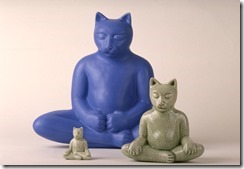
Here are two examples of how to add meditation without taking time out of your schedule.
- When you get up in the morning, you usually wash. Let’s use washing your face for our first meditation opportunity. Feel the temperature of the water on your hands. Focus on the temperature as you add a little soap. Notice how the suds feel on your hand. When a thought comes in, think of it as someone else’s phone ringing. You hear it, but you don’t have to answer it. Next, feel your soapy hands or the washcloth on your face. Focus on that sensation as you wash your face. Next, feel the rinse water on your face — how does it feel? Is it too cold? Too hot? Just right? If your mind wanders, there is no need to judge, just go back to focusing on the feeling of the water on your face. As you towel off, feel the sensation of the air on your face. It’s that simple, you just meditated.
- As you go about your day, you are most likely waiting in line or in traffic, so take a moment to breathe. Everyone has to breathe, and there is no way the person in front of you in the coffee line will know you are meditating! Sense the breath coming in and out of your nose or mouth. Don’t worry about thoughts; you know what to do, think of your thoughts as someone else’s cellphone ringing. Some people like to label their thoughts as “thought” and then let them go. The important thing is returning to sensing your breath coming in and out of your body. You will feel your shoulders relax and your patience returning.
-
Coloring Page

-
Narrow Indication for Abuse-Deterrent Morphine
The latest opioid approved by FDA will be “expected” to reduce abuse by only one route — injection — in its official labeling.
In a carefully-worded press release, drugmaker Egalet said its extended-release morphine drug Arymo ER “increased resistance to cutting, crushing, grinding or breaking using a variety of tools. Due to its physical and chemical properties, Arymo ER is expected to make abuse by injection difficult.”

In an FDA advisory committee meeting last year, participants voted that the drug could deter abuse via the oral, nasal, and intravenous routes of abuse. But there were several reasons only the intravenous route won labeling.
An FDA spokesperson told MedPage Today that MorphaBond, another morphine product, has “marketing exclusivity for labeling describing the expected reduction of abuse of single-entity, extended-release morphine by the intranasal route due to physicochemical properties.” MORE HERE
-
believe
“We do not believe in ourselves until someone reveals that deep inside us something is valuable, worth listening to, worthy of our trust, sacred to our touch. Once we believe in ourselves we can risk curiosity, wonder, spontaneous delight or any experience that reveals the human spirit.” E.E. Cummings
-
Habits
DESPITE the best intentions for the new year, the reality is that by next month, gym memberships will lapse, chocolate will replace carrots and Candy Crush will edge out Moby Dick.
It’s not (only) that we’re undisciplined slugs. It’s that much of what we know — or think we know — about habits is wrong. Here’s a primer that might help keep you off the couch and on the treadmill.
MYTH 1 We fail to change our habits — or start good new ones — because we lack willpower.
Not really, said Wendy Wood, a professor of psychology and business at the University of Southern California. Willpower, she said, is more about looking at those yummy chocolate chip cookies and refusing them. A good habit ensures you’re rarely around those chocolate chip cookies in the first place.
To create or change a habit, you have to think much more about altering your environment and patterns of living than work on steeling your mind, Professor Wood said, because “behavior is very much a product of environment.”
Habits — at least good ones — exist so we don’t have to resist temptation all the time. Imagine if every morning you had a debate with yourself about eating cake or cereal for breakfast. Instead, most of us form the habit of eating something relatively healthy for breakfast, which bypasses the lure of the cake altogether.
That’s why it’s sometimes easiest to start or break a habit during a major transition. This may sound counterintuitive, but a new house, job or relationship breaks old patterns, said Gretchen Rubin, author of the forthcoming book, “Better Than Before: Mastering the Habits of Our Everyday Lives.”
“People say wait a few days to get settled, but don’t,” she said. “Start right away.”
MYTH 2 We fall back on bad habits when stressed. In fact, good habits persist even in times of high anxiety, Professor Wood said. A study of which Professor Wood was one of the co-authors found that students who already had unhealthy diets would eat junk food when stressed, but those who already had the habit of eating well — or of reading a newspaper or of going to the gym — were just as likely to do that.
MYTH 3 It takes about 21 days to break or make a habit.
That number seems to have cropped up in the 1960s and somehow became “fact” with no real proof. But in 2009, researchers in Britain decided to take a deeper look by studying how long it took participants to learn new habits, such as eating fruit daily or going jogging. The average was 66 days.
But individuals’ times varied greatly, from 18 days to 245 days, depending on temperament and, of course, the task involved. It will most likely take far less time to get into the habit of eating an apple every afternoon than of practicing the piano for an hour a day.
MYTH 4 You need positive thinking to break or make a habit.
“We find positive fantasy is not helpful and may even be hurtful when trying to reach a desired future or fulfill a wish,” said Gabriele Oettingen, a professor of psychology at New York University and the University of Hamburg.
Over years of research, she discovered that people need to pair optimistic daydreams about the future with identifying and imagining the obstacles that prevent them from reaching that goal — something she calls mental contrasting.
Say you want to stop being a procrastinator. The first step is easy. Imagine how it will feel if your work is completed with plenty of time to spare, if you can sleep instead of pulling an all-nighter, said Professor Oettingen, author of “Rethinking Positive Thinking.”
But don’t just resolve to stop procrastinating. The second step is to identify what holds you back from changing yourself. Is it fear that you won’t succeed? Is it the adrenaline rush of frantically working at the last minute? Is it because of negative feelings toward a boss or teacher?
The mental contrasting needs to be in the right order. It’s important to “experience our dreams, then switch gears and mentally face reality,” Professor Oettingen said.
Doing it the opposite way — imagining the obstacles and then fantasizing about changing habits — doesn’t seem to work as well, research shows.
MYTH 5 Doing things by rote, or habit, isn’t good in most cases. It’s better to be mindful of everything we do.
Research shows that most people repeat about 40 percent of their activities almost every day.
“We only have so much room in our brain,” said Ian Newby-Clark, an associate professor of psychology at the University of Guelph in Canada. “It would be incredibly taxing if we had to mindfully plan every step of our day.” Habits free us up so we can think about other things.
And while some habits are objectively bad — smoking, say, or being consistently late — most are subjective. “Habits are only good or bad to the extent they’re consistent or inconsistent with your goals,” Professor Wood of U.S.C. said. It’s a bad habit when “it starts interfering with other goals you have.”
For example, many people said their resolution this year was to cut down the time they spend online.
But why? Because it’s an inherently bad thing to do? Or is it an obstacle to spending more time reading books or riding a bike or learning to knit?
After thinking about it, you may choose to spend less time on your computer or phone. Or you might decide it’s not so terrible in limited doses and shed the habit of feeling guilty about it.
MYTH 6 Everything in moderation.
“There’s a real difference among people about how easily they adapt to habits,” Ms. Rubin said. Some see habits as liberating; some see them as a trap. Some prefer to make a huge change all at once; others proceed step by step.
“I’m in the small minority that loves habits,” Ms. Rubin said, adding that she tends to find it easier to abstain from certain things altogether. For example, she eats no carbohydrates.
“People said I was doomed to failure, but it’s not true,” she said. But, she noted, “it’s a mistake to think the abstainer is more disciplined. For me it’s easier to be an abstainer than have to deliberate each time whether I can eat something or not. Others would go nuts if they abstain.”
That’s why you shouldn’t listen to people who tell you you’re doing it wrong if it works for you, she said.
Also, people shouldn’t fear that their habit will dissolve if they don’t practice it daily.
“If you lapse once or twice, you’re not ruined,” Professor Wood said. “That’s a misconception.”
And that leads to …
MYTH 7 Shame and guilt keep you on track.
No. People need to be kinder to themselves, showing self-compassion if they lapse, Ms. Rubin said. But it’s a fine balance between treating yourself kindly and making endless rationalizations and excuses.
“I might mindfully make an exception,” she said, such as choosing to eat a traditional Christmas cake every year. “But I’m not making excuses in the moment: I’ll hurt the hostesses’ feelings. You only live once. It’s the holidays.”
One last piece of advice: If you want to be in better shape, get a dog. Professor Wood said studies show dog owners have lower body mass indexes. But here’s the catch: That’s only true if you walk the animal.
-
White Tara




 CreativeTherapyTools