
-
Anger Management
Over the years I have facilitated anger management groups. I use a variety of handouts and activities to have a process oriented group interaction. One of the hand outs I use is below. I use it in 1 of 2 ways. I have folks fill it out first and then we discuss or we go through it together and discuss. We explore as a group, learning from each other.

ANGER WORDS
anger disgust grumpiness rage aggravation dislike hate resentment agitation envy hostility revulsion annoyance exasperation irritation scorn bitterness ferocity jealousy spite contempt frustration loathing torment cruelty fury mean-spiritedness vengefulness destructiveness grouchiness outrage wrath
Other:_________________________
Prompting Events for Feeling Anger
Losing power.
Losing status.
Losing respect.
Being insulted.
Not having things turn out the way you expected.
Experiencing physical pain.
Experiencing emotional pain.
Being threatened with physical or emotional pain by someone or something.
Having an important or pleasurable activity interrupted, postponed, or stopped.
Not obtaining something you want (which another person has).
Other:_______________________________
Interpretations That Prompt Feelings of Anger
Expecting pain.
Feeling that you have been treated unfairly.
Believing that things should be different.
Rigidly thinking “I’m right.”
Judging that the situation is illegitimate, wrong, or unfair.
Ruminating about the event that set off the anger in the first place, or in the past.
Other:____________________________
Experiencing the Emotion of Anger
Feeling incoherent.
Feeling out of control.
Feeling extremely emotional.
Feeling tightness or rigidity in your body.
Feeling your face flush or get hot.
Feeling nervous tension, anxiety or discomfort.
Feeling like you are going to explode.
Muscles tightening. .
Teeth clamping together, mouth tightening.
Crying; being unable to stop tears.
Wanting to hit, bang the wall, throw something, blow up.
Other:__________________________
Expressing and Acting on Anger
Frowning or not smiling; mean or unpleasant facial expression.
Gritting or showing your teeth in an unfriendly manner.
Grinning.
A red or flushed face.
Verbally attacking the cause of your anger; criticizing.
Physically attacking the cause of your anger.
Using obscenities or cursing.
U sing a loud voice, yelling, screaming, or shouting.
Complaining or bitching; talking about how lousy things are.
Clenching your hands or fists.
Making aggressive or threatening gestures.
Pounding on something, throwing things, breaking things.
Walking heavily or stomping; slamming doors, walking out.
Brooding or withdrawing from contract with others.
Other:_____________________
Aftereffects of Anger
Narrowing of attention.
Attending only to the situation making you angry.
Ruminating about the situation making you angry and not being able to think of anything else.
Remembering and ruminating about other situations that have made you angry in the past.
Imagining future situations that will make you angry.
Depersonalization, dissociative experience, numbness.
Intense shame, fear, or other negative emotions.
Other:______________________
-
3 Dietary Interventions that Can Help Children with ADHD
Are dietary interventions effective for treating ADHD? For many parents and professionals, trying to parse through the different claims about the impact of diet on ADHD has been challenging and confusing. At this point, substantial research on how dietary interventions impact ADHD has accumulated and several meta-analyses of this work have been published. Recently, a review of several meta-analyses of dietary interventions for ADHD was published [Research review: The role of diet in the treatment of attention-deficit/hyperactivity disorder — an appraisal of the evidence on efficacy and recommendations on the design of future studies]. In this paper, the authors summarize findings across 6 different meta-analyses of the impact of diet on ADHD to provide a high level summary of the best available evidence to date.
Types of dietary interventions

Three types of dietary interventions were reviewed — Restricted Elimination Diets (RED), Artificial food coloring exclusion (AFCE), and supplementation with free fatty acids (SFFA). Although other types of supplements beyond free fatty acids have been investigated, the authors felt there was not sufficient research on any single approach to include in their summary.
1. Restricted elimination diets (RED) — There are 2 different approaches to implementing this diet. In one approach, the child is placed on an extremely restricted diet, e.g., rice, turkey, a range of vegetables (lettuce, carrots, cauliflower, cabbage, beets), pears and water; this is sometimes referred to as the Few Food Diet. When a reduction in ADHD behaviors results — this would generally occur within 2–3 weeks if the diet is going to have a positive effect — new foods can be added back one at a time to see if they are well-tolerated or lead to an increase in problem behaviors. Alternatively, particular foods that are suspected to exacerbate a child’s symptoms may be removed one at a time to see if the child’s behavior improves.
2. Artificial food coloring exclusion (AFCE)- As the title indicates, this involves efforts to remove all artificial food colorings from a child’s diet, e.g.,Yellow #6, Yellow #5, Sodium Benzoate, Blue #2, etc., and observing whether this is associated with a reduction in ADHD behaviors. Carefully conducted trials have demonstrated that AFC’s – in amounts children could typically consume – can increase ADHD symptoms in many children.
3. Essential fatty acid supplementation — Certain fatty acids, e.g., Omega 3 and Omega 6, promote neural functioning. These fatty acids are called essential because they are not synthesized in the body and must be ingested. Children with ADHD may have lower levels of essential fatty acids relative to peers and several studies have demonstrated a link between low levels of EFAs and the severity of ADHD symptoms. Studies investigating the benefits of fatty acid supplementation for youth with ADHD raise fatty acid levels by administering capsules containing the fatty acids or sometimes by introducing diets rich in fish products. – See more at: http://www.creativitypost.com/science/3_dietary_interventions_that_can_help_children_with_adhd_especially_when_pr
-
beautiful wild forces
“There are beautiful wild forces within us. Let them turn the mills inside and fill sacks that feed even heaven.” St. Francis of Assisi

-
Addiction: Is Love All You Need?
If anything deserves to be called “the establishment view,” it is what Johann Hari — in his new book on addiction and the war on drugs, Chasing the Scream: The First and Last Days of the War on Drugs — calls the pharmaceutical model of addiction.
The pharmaceutical model says that addiction is about chemicals. Addiction is a chronic incurable disease of the brain. The brain’s pleasure centers are hijacked.
The pharmaceutical model may be the conventional wisdom, but it is certainly not without controversy. Researchers such as Gene Heyman and Bruce K. Alexander have long questioned whether the data support this picture.

As Hari reminds us, heroin use was rampant among U.S. soldiers stationed in Vietnam during that conflict. According to one study he cites, 20 percent of these American servicemen were heroin users. Over 85 percent of these users gave up heroin when they got home, the book says; they simply stopped taking the drug.
How do we reconcile this fact with the idea that the drug hijacks the brain and takes over? If that’s true, you wouldn’t expect a change of scenery (coming home from Vietnam) all by itself to break the neuro-chemical stranglehold. Alternatively, you might speculate that perhaps these heroin users were not really addicted. That the fact that they stopped proves this. But then we face a new problem: If the addiction is a chemical effect of the drug, then why weren’t they addicted?
Indeed, as Heyman claims in his book, there is good evidence that most addicts in the general population, as a matter of fact, eventually stop using drugs. They stop because they get to a point where they want or need or find that they are able to stop. They decide to stop. Now, this doesn’t fit very well with the conventional wisdom. You can’t simply decide to give up other diseases like diabetes or heart disease!
Or consider the fact that, as Hari explains, actual chemical dependence seems to be only a small part of drug addiction. If addiction were just about chemicals, then you would expect that the availability of nicotine patches — which can deliver smokers every bit of the nicotine they would get from a cigarette — would, in one fell swoop, eliminate the feeling that one needs to smoke. But not so. Only 17.7 percent of smokers using nicotine patches, according to Hari, break their addiction to smoking.
Hari also describes a fascinating reverse case. At some point in the 70s, heroin interdiction in Vancouver was so effective that there was virtually no heroin on the streets. This didn’t stop dealers from selling white powder and calling it heroin, and it didn’t stop addicts from hustling to get their hands on this powder so that they could shoot up. If it is the chemical itself that drives addiction and controls the addict, then you would have expected that Vancouver’s junkies, deprived of real heroin, would have been weened of their dependence.
That this didn’t happen is striking evidence — assuming the anecdote, originally reported by Alexander, is true — that not only is the chemical itself not sufficient to explain addiction, it isn’t even necessary.
Data like these suggest that addictions, although they no doubt interact with neural chemistry, can’t adequately be understood alone in neuro-chemical terms. And this is because it is people, not brains, that get hooked. To understand the actions of addicts, you need to look at their lives as a whole. When doctors claim, as they do, that addiction is a disease of the brain, they are saying something that is either trivially true (that the brain plays a role in addiction) or something entirely false (that the brain is the whole story).
It is true, as the old commercial made vivid, that a rat in a cage will forego water to self-administer morphine every time — and will continue to do so until it is dead. But, maybe, it’s not the morphine that best explains this but, rather, the fact that the sorry rat is locked up exposed, in complete isolation from its fellows, in an otherwise empty cage.
This observation led Alexander to wonder: Would a rat in a richer environment — one including not only water and morphine, but also other rats and good food and interesting landscapes — take the same self-destructive course of action? Or, rather, would this other rat find itself so totally dominated by the rewards that the drug alone provides? To investigate this, Alexander designed “rat parks” that were much larger, interesting and hospitable environments in which communities of rats were placed. He found that happy rats in happy rat parks behaved more like casual human drinkers than liked crazed addicts, in that they limited themselves to small amounts of morphine.
This result is striking — and it certainly corresponds to my own personal experience of addiction. I have known addicts, but I have known many more drug users who were not addicted.
Now, Hari is convinced that Alexander has unlocked the true essence of addiction. Addiction is caused by isolation. And the cure for addiction, it follows, is love. We need to give the addict back his or her feeling of connection to others.
This is a beautiful idea — and I like beautiful ideas. I also think that it gets something right. Addicts are disconnected and isolated. But we need to be careful in drawing a too-speedy conclusion. The fact that being isolated is a cause of addiction doesn’t yet clarify how sociality, love, friendship, isolation, etc., function in the lives of addicts. In particular, it doesn’t mean that you can fix addiction with love.
One reason love might not be all you need is that it could be that the wounds that lead us to turn to drugs, to really give ourselves over to drugs, might have their roots in our early lives. It’s hard to simply “get over” early childhood trauma. (Hari also celebrates the work of Mate Gabor, a clinician who argues, in ways that some thinkers worry might be a bit reductive, that the sources of addiction lie in trauma.)
But there is a deeper reason to worry that love couldn’t suffice. Whatever its causes, addiction would seem to be — something like this is Heyman’s view — a disorder of one’s ability to connect to others and value the things that human beings tend usually to value (such as food, exercise, sex, family, work). The remarkable and striking thing about many addicts is that they opt for self-medication over encounter — they turn inward and shut out the world.
It might be right, as Hari claims, that we would fix addiction if we could restore in the addict a sense of connection with the world around him or her, and with other people. But that’s not a prescription as much as it is a statement of the problem. Addicts are shut off.
-
level 5 vegan
I’m a level 5 vegan, I don’t eat anything that casts a shadow. Matt Groening

-
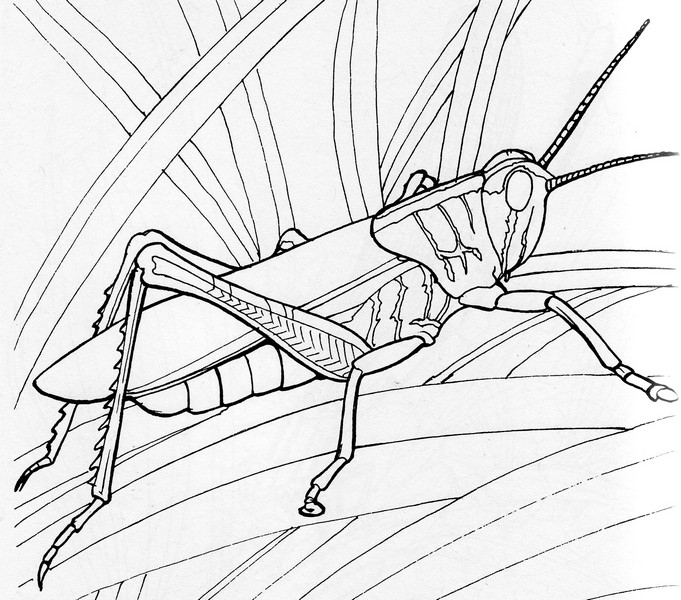
Grasshopper Coloring Page
-
Researchers seek answers of brain on (legal) cannabis
For those suffering depression or anxiety, using cannabis for relief may not be the long-term answer.
That’s according to new research from a team at Colorado State University seeking scientific clarity on how cannabis — particularly chronic, heavy use — affects neurological activity, including the processing of emotions.

Researchers led by Lucy Troup, assistant professor in the Department of Psychology, have published a study in PeerJ describing their findings from an in-depth, questionnaire-based analysis of 178 college-aged, legal users of cannabis. Recreational cannabis became legal in Colorado in 2014. Since then, seven other states have enacted legalization for recreational use, while many others allow medical use.
“One thing we wanted to focus on was the significance of Colorado, the first state to legalize recreational cannabis, and its own unique population and use that occurs here,” Troup said.
Through the study, which was based solely upon self-reported use of the drug, the researchers sought to draw correlations between depressive or anxious symptoms and cannabis consumption.
They found that those respondents categorized with subclinical depression, who reported using the drug to treat their depressive symptoms, scored lower on their anxiety symptoms than on their depressive symptoms – so, they were actually more depressed than they were anxious. The same was true for self-reported anxiety sufferers: they were found to be more anxious than they were depressed. MORE HERE
-
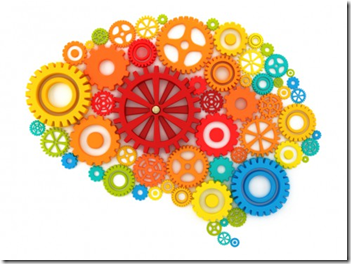
Creativity: The science behind the madness
-
Don’t think
Don’t think. Thinking is the enemy of creativity. It’s self-conscious, and anything self-conscious is lousy. You can’t try to do things. You simply must do things. Ray Bradbury
-
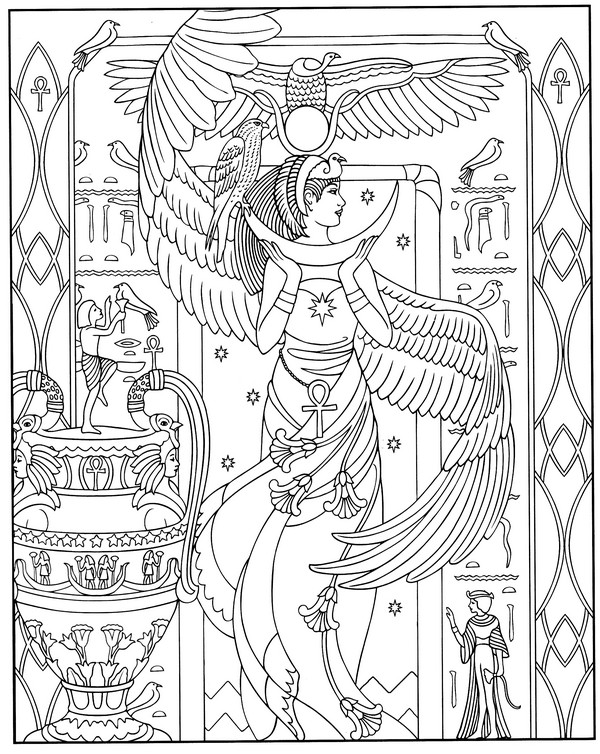
Isis Coloring Page


 CreativeTherapyTools