Home

  • Is an Optimistic Mind Associated with a Healthy Heart?

    “Health is a state of complete physical, mental, and social well-being, and not merely the absence of disease and infirmity.” — World Health Organization (1946) Many poets, philosophers, and thinkers throughout history have recognized the intimate link between physical and mental health. The ancient Roman poet Juvenal once declared “A healthy  mind in a healthy body”.

    However, until relatively recently, most psychological research has focused on the link between psychological difficulties (e.g., anxiety, depression) and physical health. But things are changing. Over the past few decades, a growing number of studies demonstrate that merely alleviating anxiety and stress don’t necessarily lead to better life outcomes. Positive characteristics, such as optimism, vitality, meaning, and subjective life satisfaction are immensely important in their own right. The related fields of positive psychology and health psychology focus on rigorous scientific investigations of how people adapt to life’s inevitable challenges, and how that is related (or even leads to) a better quality of life. This process of resilience across life is the idea of thriving, successful aging, or flourishing.
    See more at: http://www.creativitypost.com/psychology/is_an_optimistic_mind_associated_with_a_healthy_heart

  • creative thinking

    When the task at hand requires some imagination, taking a walk may lead to more creative thinking than sitting, according to research published by the American Psychological Association.

    “Many people anecdotally claim they do their best thinking when walking,” said Marily Oppezzo, PhD, of Santa Clara University. “With this study, we finally may be taking a step or two toward discovering why.”

    While at Stanford University’s Graduate School of Education, Oppezzo and colleague Daniel L. Schwartz, PhD, conducted studies involving 176 people, mostly college students. They found that those who walked instead of sitting or being pushed in a wheelchair consistently gave more creative responses on tests commonly used to measure creative thinking, such as thinking of alternate uses for common objects and coming up with original analogies to capture complex ideas. When asked to solve problems with a single answer, however, the walkers fell slightly behind those who responded while sitting, according to the study published in APA’s Journal of Experimental Psychology: Learning, Memory and Cognition.

    While previous research has shown that regular aerobic exercise may protect cognitive abilities, these researchers examined whether simply walking could temporarily improve some types of thinking, such as free-flowing thought compared to focused concentration. “Asking someone to take a 30-minute run to improve creativity at work would be an unpopular prescription for many people,” Schwartz said. “We wanted to see if a simple walk might lead to more free-flowing thoughts and more creativity.”

    Of the students tested for creativity while walking, 100 percent came up with more creative ideas in one experiment, while 95 percent, 88 percent and 81 percent of the walker groups in the other experiments had more creative responses compared with when they were sitting. If a response was unique among all responses from the group, it was considered novel. Researchers also gauged a participant’s total number of responses and whether a response was feasible and appropriate to the constraints of the task. For example, “Putting lighter fluid in soup is novel, but it is not very appropriate,” Oppezzo said.

    In one experiment with 48 participants, each student sat alone in a small room at a desk facing a blank wall. When a researcher named an object, the student came up with alternative ways to use the object. For example, for the word “button,” a person might say “as a doorknob on a dollhouse.” The students heard two sets of three words and had four minutes per set to come up with as many responses as possible. To see how walking might affect more restricted thinking, the researchers also had the students complete a word association task with 15 three-word groups, such as “cottage-Swiss-cake,” for which the correct answer is “cheese.” Participants repeated both tasks with different sets of words first while sitting and then while walking at a comfortable pace on a treadmill facing a blank wall in the same room.

    With a different group of 48 students, some sat for two different sets of the tests, some walked during two sets of the test and some walked and then sat for the tests. “This confirmed that the effect of walking during the second test set was not due to practice,” Oppezzo said. “Participants came up with fewer novel ideas when they sat for the second test set after walking during the first. However, they did perform better than the participants who sat for both sets of tests, so there was a residual effect of walking on creativity when people sat down afterward. Walking before a meeting that requires innovation may still be nearly as useful as walking during the meeting.”

    Students who walked in another experiment doubled their number of novel responses compared with when they were sitting. The 40 students in this experiment were divided into three groups: One sat for two sets of tests but moved to separate rooms for each set; another sat and then walked on a treadmill; and one group walked outdoors along a predetermined path.f-202.jpg

    To see if walking was the source of creative inspiration rather than being outdoors, another experiment with 40 participants compared responses of students walking outside or inside on a treadmill with the responses of students being pushed in a wheelchair outside and sitting inside. Again, the students who walked, whether indoors or outside, came up with more creative responses than those either sitting inside or being pushed in a wheelchair outdoors. “While being outdoors has many cognitive benefits, walking appears to have a very specific benefit of improving creativity,” said Oppezzo.

    More research will be necessary to explain how walking improves creativity, the authors said. They speculated that future studies would likely determine a complex pathway that extends from the physical act of walking to physiological changes to the cognitive control of imagination. “Incorporating physical activity into our lives is not only beneficial for our hearts but our brains as well. This research suggests an easy and productive way to weave it into certain work activities,” Oppezzo said.

    Marily Oppezzo, Daniel L. Schwartz. Give your ideas some legs: The positive effect of walking on creative thinking.. Journal of Experimental Psychology: Learning, Memory, and Cognition, 2014; DOI:

  • My favorite photographers: Graciela Iturbide

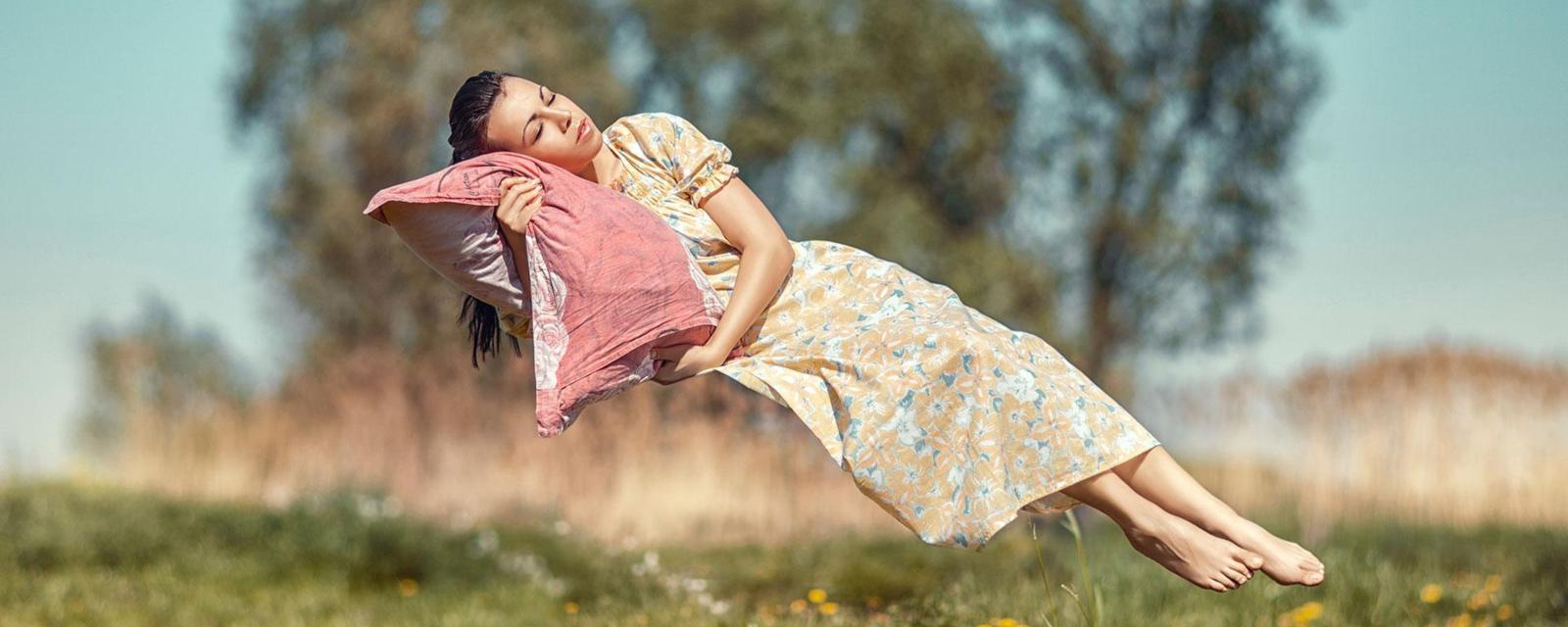
    Graciela Iturbide is one of the great contemporary photographers of Mexico. As a protégé of the modernest master Manuel Alvarez Bravo, she worked as his assistant before starting her own career in photography in the early 1970’s. Working mostly in large-scale documentary projects, she was commissioned in 1978 by the Ethnographic Archive of the National Indigenous Institute of Mexico to photograph Mexico’s indigenous population. The resulting project photographing the Seri Indians yielded one of her most iconic works, Mujer ángel, Desierto de Sonora in 1979. She has worked in her native Mexcio as well as Cuba, East Germany, India, Madagascar, Hungary, Paris and the United States. She was the recipient of the W Eugene Smith grant in 1971 and the prestigious Hasselblad award in 2008.

  • heart

    In prayer it is better to have a heart without words than words without a heart. Mahatma Gandhi 

    207493_504880642869488_1978781996_n.jpg

  • Creativity

    Creativity is piercing the mundane to find the marvelous. Bill Moyers


  • Self-control and Success

    Most of us believe that a certain amount of self-control is crucial for success. In order to succeed in the modern world, you need expertise in some area. Gaining that expertise requires work and practice. The discipline to work or practice at something means that you have to give up things that might be fun right now in order to engage in actions that will be rewarding in the future.
    Research by Walter Mischel, Yuichi Shoda, and their colleagues supports this link.
    They looked at the relationship between the delay of gratification task developed by Walter Mischel in the 1960s and later performance.
    See more at: http://www.creativitypost.com/psychology/self_control_and_success
  • Advice on how to get out of a rut

    1. “Get out of the studio… far away from the computer and look for the fabulous in the mundane. Mini road trips to antique malls and thrift shops provide some of the most amazing juxtapositions of function, color, shape and materials, as well as time to ponder them. Not to mention, the drive itself forces an unplugged brain cleanse that makes space for the new ideas to get in.” — Bob Faust, Principal/Designer,Faust Ltd.
    2. “I like to have several things going at once. That way, if one’s not coming I can work on something else. If none of them have any life to ’em, the best thing to do is to just take a break. There’s nothing worse than trying to force it and the world doesn’t need any more bad art; there’s already plenty of that.” — Dmitry Samarov, Painter and Writer
    3. “I make a cup of coffee instead of miming one. I stop ripping out my hair in large tufts and watch it grow in. I take a walk and get a life. The rut will pass. Not creating with a gun to your head works, too.” — Susan Messing, Improvisor, Messing With A Friend
    4. “I always reach out to my mom to get inspiration if I’m in a rut. Childhood memories are big part of our restaurants. At Urbanbelly, menu item number #15 “Rice Cake” is from a street vendor when I was growing up in Seoul, Korea. So my mom reminds me about certain dishes or even tells me a recipe that she has used.” — Bill Kim bellyQ Urbanbelly, and bellyshack.
    5. “After attending a great play, or great musical concert, I tend to become creatively inspired. After listening to someone like Stevie Wonder in concert for 2 hours, it’s kind of hard not to.” — Billy Branch, Three-time Grammy Award Nominee
    6. “The most difficult thing for me is to get started on a big creative project. I have many ideas, but putting them into clear form is a true challenge! In those cases, I need to clear my mind of all other life concerns, and I give myself the time to take a nice walk or do some meditation so that my mind is clear of all the little stresses that get in the way. Then, I reserve a good chunk of uninterrupted time to work, as the big creative projects require intense focus to be formulated.”  — George Lepauw, President and Artistic Director of the International Beethoven Project
    7. “To dig my way out of a creative rut, I close the door to my hayloft studio…and hit the closets to play “Keep & Toss.” Once everything is bagged & tagged for donation, I pour a red beverage and turn off my brain in front of an old movie;Mommy Dearest paved the way for Spring ’13!” — Peach CarrProject RunwaySeason 8 & All Star
    8. “In order to come up with new dishes, I fast and go for long runs. Being very hungry brings clarity to exactly what I crave and want to eat. Refinements of these ideas often end up on my menus.” — Gray McNally, Tortoise Club
    9. “I lock myself in a dance studio, put on good music and improvise.  Without setting any rules, I simply dance, allowing myself the space to move free of judgment.  Removing the pressure of creating on a deadline or for a specific reason, frees me up, resulting in more spontaneous and rich movement.” — Stephanie Paul, Be the Groove, Co-Founder/Artistic Director
    10. “Sometimes when I find myself in a creative rut, I look to my cookbook collection. I more often than not go to the books that I bought when I started cooking, like Alfred Portale’s 12 Seasons, Alain Ducasse’s Grand Livre de Cuisineor even recent publications like anything from Stephane Raynaud. Sometimes just a glimpse at a picture can start the creative juices flowing, and get me back on track.” — Sean Pharr, Chef de Cuisine NoMI Kitchen
    11. “When I’m in a creative rut, it is frustrating and tortuous because it can lead to self-doubt and the thought, ‘has my artistic well run dry?’ When it happens, I step away from my work, clear my mind through meditation and have a good laugh watching Modern Family.” — Stacy Bowie, Painter
    12. “I believe creative ruts are often related to overtiredness and being overloaded. Rest, breath, laughter and nature for rejuvenation are my go-to solutions, and I often spend time with kids playing because it cleanses my mind and starts me at a free, playful, creative place. Taking quiet time with my animals also puts me in a place to start any creative process, and then I trust.” — Melissa Veal, Wig and Make-up Designer, Chicago Shakespeare Theater
    13. “It’s easy to get into a rut when you are conceiving and designing shows a lot, back to back. The nature of commercial theatre dictates that you think really far ahead and sometimes that is very limiting. For me, the final creative answers can’t come until you are in the room, so it’s a matter of balancing the practical with the creative.” — Rachel Rockwell, Director/Choreographer
    14. “I spend some time outdoors hiking, foraging, camping or fishing. Nature puts me back on track!” — Paul Virant, Chef/owner Vie Restaurant, Chef/partnerPerennial Virant
    15. “Navigating out of a creative ‘rut’ means taking an afternoon away from my studio to sit in a hotel lobby and sketch people. I can immerse myself in seeing a variety of fascinating subjects, interesting fashion looks, all while madly capturing them with pencil on paper. Afterwards, I feel creatively refreshed-ready to tackle new fashionable opportunities.” — Rosemary Fanti, Fashion Illustrator
    16. “I take a shower. There is something about the rote activity of washing your hair that frees up your mind.” — Jared Van Camp, Executive Chef Nellcote
    17. “When I feel stuck creatively, it’s generally because I’ve been at it for too long. When that happens, I delve into another art form for awhile (i.e., if I’m stuck on a painting or drawing, I might go and write a poem or short story, immerse myself in cooking a wonderful meal, or meditate for a bit.) Switching it up really helps. A fresh look is invaluable when you return, and you come back with renewed perspective.” — Lyn Pusztai Co-owner / Co-designer of Roulette 18 jewelry and Freelance Painter/Illustrator
    18. “Distraction works best. When I’m out on the road I crave the quiet of the painting studio and vice versa. Making art is my job and mostly I don’t have time to get to all the nonsense bubbling in my skull.” — Jon Langford, Artist and Musician
    19. “When I am in a creative rut, I go to art museums and art shows, and look at other people’s art. I also look at books with pictures in them to get the visual part of my mind working and activated. Going out in nature always stimulates my senses and my mind, so I do that to find inspiration, as well, and I usually come back with some new ideas. Also, going to lectures, movies, taking a walk in the city, and listening to some music seems to help free my mind a bit, so that some inspiration can float in when I am diverted and not trying so hard. I am the most creative when I am relaxed and not trying.” — Victoria FullerArtist/Musician
    20. “One way that I get out of a creative rut is to sit down with super forward-thinking books, as well as ones from cooking school (the fundamentals). It helps me find my center. Usually hyper-focusing on an upcoming season like Spring and Google-searching images helps create a positive flow of thoughts.” — Pat Sheerin, Executive Chef/Partner, Trenchermen
    21. “After dinner, I head to the studio for ‘concepting time.’ When I feel the creative rut creeping in, I put on Chicago Tonight and break out a sketch book. That show always provides a variety of intellectual stimulation to get my mind and imagination warmed up. If after an hour my sketches are lame, at least I saw/heard an excellent show!” — Jeff ZimmermannArtist
    22. “I read poetry… Rumi, Neruda, Rilke, and my own poetry, to remind myself of my own art. The words help me to see shapes, colors, form, which then inspire me to write, paint and create.” — Arica Hilton, Poet/Artist
    23. “Usually, when I need inspiration, I get more collaborative, working with all members of the team can help spark some initial burst of creativity. Or, I’ll cook something with my wife and children to help drown out all of the noise (budgets, P&L statements, deadlines, etc) that fills my head and I can focus on what I enjoy the most. My kids have amazing palates, too – they let me know if anything is off balance in a dish, so I really focus on clean, simple, well prepared items.” — James O’Donnell, Michael Jordan’s Steak House
    24. “If I get into a creative rut, I take a long bath, light a candle, and listen to soft music followed by a nice long slumber. After a restful night’s sleep, I often wake to a morning of refreshing ideas!” — Dee Alexander, vocalist
    25. “I choose to spend my time with brilliant people, who excel in many different areas, and this helps me get out of my creative rut. From restauranteurs to investment bankers and from musicians to engineers, the people with whom I surround myself inspire me to create new pieces and come up with ideas that meld different types of art.” — Josephine Lee, President and Artistic Director of Chicago Children’s Choir
    26. “To get inspired I love going to some of my favorite Italian restaurants like Balena or Piccolo Sogno and when I can, I also love going to New York to visit my Italian favorites like Lupa, Keste or Il Buco. Going back to my favorite cookbooks, like Babbo and A16, also helps me get new thoughts and inspiration.” — Chris Macchia, The Florentine
    27. “I destress. I take the pressure off of creating just for creation purposes. At times, we can focus on the business aspect or the productivity of our craft so much that it sucks the passion out of us. I go have fun and stop thinking so hard. I let life take it’s course and fill me with experiences that shape my art. Also, our competitive nature can block creativity. I remind myself that I’m not competing to win a contest. I remind myself that this is what I love and how and why I fell in love with it.” — Marco The Poet, Poet, co-founder of Speak Life Movement
    28. “On the rare occasion that I’m uninspired about a piece I’m practicing, I play something else, and return to the original piece feeling more refreshed. I love talking about music, but can find it challenging to write essays or articles on the subject. My solution is to just write something, anything, and once I get going, I find it usually isn’t so bad after all!” — Rachel Barton Pine, international violin soloist
    29. “I go to the movies, go see live theater or music.  I find that experiencing the creativity of others is most inspiring.” — Lynne Jordan, vocalist
  • Anxiety

    We all know the uncomfortable feeling of anxiety. Our hearts race, our fingers sweat, and our breathing gets shallow and labored. We experience racing thoughts about a perceived threat we fear will be too much to handle. That’s because our “fight or flight” response has kicked in, resulting in sympathetic arousal and a narrowing of attention and focus on avoiding the threat. We seem to be locked in that state, unable to focus on our daily chores or longer-term goals.  Below are six strategies that you can use to help relieve your everyday anxiety:

    • Reevaluate the probability of the threatening event actually happening.

    Anxiety makes us feel that a threat is imminent, yet most of the time what we worry most about never happens. By recording our worries—and how few actually came true—we can notice how much we overestimate the prospect of negative events.

    • De-catastrophize.

    Even if a bad event happened, we may still be able to handle it by using  coping skills and problem-solving abilities or by enlisting others to help. Although not pleasant, we could still survive encountering a spider, having a panic attack, or losing money. It’s important to realize that very few things are the end of the world.feelings-54

    • Use deep breathing and relaxation.

    By deliberately relaxing our muscles we begin to calm down so we can think clearly. If you practice this at first without a threat present, it can start to become automatic and will be easier to use in the moment when you face a threat. Deep breathing engages the parasympathetic nervous system to put the brakes on sympathetic arousal.

    • Become mindful of your own physical and mental reactions.

    The skill of mindfulness involves calmly observing our own reactions, including fear, without panic or feeling compelled to act. It can be taught in therapy and improves with practice.

    • Accept fear and commit to living a life based on core values.

    Acceptance and Commitment Therapy (ACT) is an approach that encourages people to accept the inevitability of negative thoughts and feelings and not try to repress or control them. By directing attention away from the fear and back onto life tasks and valued goals, we can live a full life despite the fear.

    • Exposure.

    Exposure is the most powerful technique for anxiety and it involves facing what we fear and staying in the situation long enough for the fear to habituate or go down, as it naturally does. Fear makes us avoid or run away, so our minds and bodies never learn that much of what we fear is not truly dangerous.


  • To Town in Winter Snow

    Testing my Canon Powershot A2500 mounted with PanaVise, oriented forward. 720p.


  • Coloring Page Mandala

    CPMX-TR-204.jpg