
-
California Dogface Coloring Page

-
Managing Son’s Heroin Addiction a ‘Full-Time Job’
A family of eight outside Boston is struggling with their second-oldest son’s heroin addiction. Recently, he overdosed, and paramedics revived him with Narcan. Click for NBC clip (requires flash player).
-
Art and brain science
Here is an interesting article from the NYT about the brain and art from a professor of brain science at Columbia University.:…… The portraiture that flourished in Vienna at the turn of the 20th century is a good place to start. Not only does this modernist school hold a prominent place in the history of art, it consists of just three major artists — Gustav Klimt, Oskar Kokoschka and Egon Schiele — which makes it easier to study in depth.
As a group, these artists sought to depict the unconscious, instinctual strivings of the people in their portraits, but each painter developed a distinctive way of using facial expressions and hand and body gestures to communicate those mental processes.
Their efforts to get at the truth beneath the appearance of an individual both paralleled and were influenced by similar efforts at the time in the fields of biology and psychoanalysis. Thus the portraits of the modernists in the period known as “Vienna 1900” offer a great example of how artistic, psychological and scientific insights can enrich one another.
The idea that truth lies beneath the surface derives from Carl von Rokitansky, a gifted pathologist who was dean of the Vienna School of Medicine in the middle of the 19th century. Baron von Rokitansky compared what his clinician colleague Josef Skoda heard and saw at the bedsides of his patients with autopsy findings after their deaths. This systematic correlation of clinical and pathological findings taught them that only by going deep below the skin could they understand the nature of illness.I’ve read many a book and chatted with art therapists about the psychological process involved in art and art making and this article comes from a different perspective; brain science.
-
waking up
Beyond living and dreaming
there is something more important:
waking up. Antonio Machado

-
California Sister Coloring Page
-
The Ten Rules For Being Human
1. You will receive a body.
2. You will be presented with lessons.
3. There are no mistakes, only lessons.
4. Lessons are repeated until learned.
5. Learning does not end.
6. “There” is no better than “here.”
7. Others are only mirrors of you.
8. What you make of your life is up to you.
9. All the answers lie inside of you.
10. You will forget all of this at birth.
-
Five Strengths
I used to think that mentally strong people had superhuman qualities. I thought that they were bestowed with some sort of cybernetic strength that they – and only they – had.
I thought I would never be like that. In fact, I thought most people would never be like that.
But then I tried something. I took on a challenge that to me seemed impossible. And while we all have things that seem impossible – completing a book, starting a business, passing state exams – mine happened to be running a hundred mile race.
It was the hardest thing I have ever done. But when I finished, I also realized something. The ONLY thing that had held me back was my perception. See, I thought the race would be harder than it really was. I thought it would be so hard that I couldn’t do it. And that is EXACTLY what had held me back.
What I realized was that mental toughness isn’t about being superhuman. It’s about cultivating a few strengths consistently.
Here they are:
Gratitude: You may not associate gratitude with mental toughness, but you probably do associate mental toughness with overcoming adversity. That’s where gratitude come in. Gratitude gives us the reserve we need when times get tough. I think of it like an extra energy source that I can reach into when I have nothing left. Because there are ALWAYS things to be grateful for. And sometimes when facing adversity, it is those things we need to find to get through. And mentally strong people know just how to direct this quality to counteract the chain of negative thoughts that we all face when things don’t go our way. It’s then that we need to remember when things did go well, the successes we have had, and the people along the way who have helped us.
Openness: Mentally tough people do not see the world as a set of predictable steps that lead to the promised-land. Life is just not like that, and mentally strong people know that the only thing we know for sure is that things will change. And sometimes, in ways that we don’t like. But the other thing that happens when life puts a roadblock in our path is that we find a new path. And sometimes a better one. What mentally strong people know is every adversity also bring opportunity. But in order to see it, we have to first be willing to change.
A Sense of Personal Strength: The belief that you are strong doesn’t happen because things went your way. Perception of strength is carved out through the setbacks, roadblocks, and difficulties you’ve faced. It happens because you earned it. And while mentally strong people won’t tell you that they enjoy battling adversity, they will say that life without adversity is like life not actualized. Because it’s in adversity that our strengths our realized. And it’s in then that we come to know how strong we really are.
Meaningful Relationships: The truth is no one can go it alone – not even mentally strong people. But mentally strong people also don’t need an entire army cheering for them. What they do need – and what all need – are a few close relationships where we can let ourselves be seen. We can let our guard down, say what we need to say, and be heard. Every person – even the strongest – has a need to be accepted. And not just for their strengths. Because what mentally strong people also know is thatstrength is nothing without the vulnerability to be seen as we are – faults and all. It is only then that we can make peace with our faults. And it is only then that we can also make peace with our losses and find the strength to move forward.
Faith: You don’t have to be a spiritual person. You don’t even have to believe in God. But what mentally strong people know is that in order to get through adversity you do have to have faith. You have to believe that somehow it is possible. It is possible for you to face adversity and make it through. It is possible for you to grow stronger from it. And it is possible for you to be mentally tough. It all starts with faith – in yourself, and in something larger than you. Because the minute you connect your experience to something larger, it isn’t about you anymore. And the adversity you face isn’t personal. Adversity becomes something that we all face – for the purpose of getting stronge
-
Tiphiid Wasp Coloring Page

-
The Brain,left,right and tested.
Do you know what the attributes of your right and left sides of your brain? Listed below are the common elements of left and right brain hemisphere’s. Plus go here to take the left/right side brain test to see which side may be dominant.
Left Hemisphere – Rational
Responds to verbal instructions
Problem solves by logically and sequentially looking at the parts of things
Looks at differences
Is planned and structured
Prefers established, certain information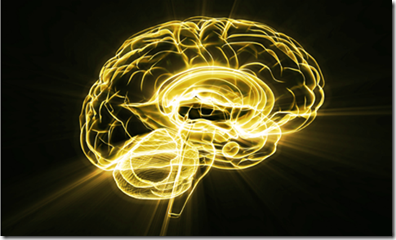
Prefers talking and writing
Prefers multiple choice tests
Controls feelings
Prefers ranked authority structuresRight Hemisphere – Intuitive
Responds to demonstrated instructions
Problem solves with hunches, looking for patterns and configurations
Looks at similarities
Is fluid and spontaneous
Prefers elusive, uncertain information
Prefers drawing and manipulating objects
Prefers open ended questions
Free with feelings
Prefers collegial authority structuresIt seems that lots of folks have emailed me about all sorts of other left/right side brain tests/quizzes online. Here are the top 2 tests.
Hemispheric Dominance Inventory Test: This test has 18 questions and you choice between 2 answers. I like the questions they seem interesting and thought provoking.
Right Brain vs Left Brain Creativity Test: This test of 54 questions is multiple choice with 4 choices and all of the questions are on one page like the test above. Some repeating of questions, which is fairly standard in personality type tests.
-
Meditation can relieve pain
Meditation can relieve pain, and it does so by activating multiple brain areas, according to an April 2011 study in the Journal of Neuroscience. Fadel Zeidan of Wake Forest University and his colleagues scanned people’s brains as they received uncomfortably hot touches to the leg. When subjects practiced a mindful meditation technique that encourages detachment from experience while focusing on breathing, they reported less pain than when they simply paid attention to their breathing. Likewise, different patterns of brain activity emerged under the two conditions, with mindful meditating resulting in more activity not only in executive centers that evaluate experiences and regulate emotions but also in lower regions that control the signals coming from the body.
The volunteers learned the meditation technique in only four 20-minute sessions, which means this pill-free analgesia could be a feasible way to help real patients suffering from pain. “People can reap some of the benefits of meditation without extensive training,” Zeidan says.

When I work with patients using mindfulness I start by asking who has experience with any type of meditation, breathing techniques and/or relaxation exercises. We than have a brief explanation and question and answer period and I focus on removing any doubt, fear, or skepticism. I usually than do a 10 to 12 minute body scan moving right into a mindful meditation that focuses on the breath.
With the co-occurring patients I work with this process seems to work the best. The chat in the beginning warms people up, the body scan relaxes which helps the meditators enter into a more meditative state.


 CreativeTherapyTools