
-
Preferences for group arts therapies
From BMJ Open:
Abstract
Objectives The arts therapies include music therapy, dance movement therapy, art therapy and dramatherapy. Preferences for art forms may play an important role in engagement with treatment. This survey was an initial exploration of who is interested in group arts therapies, what they would choose and why.
Conclusions Large proportions of the participants expressed an interest in group arts therapies. This may justify the wide provision of arts therapies and the offer of more than one modality to interested patients. It also highlights key considerations for assessment of preferences in the arts therapies as part of shared decision-making.Read the entire article at BMJ Open.

-
Dance/Movement Therapy & Autism: Dances of Relationship
-
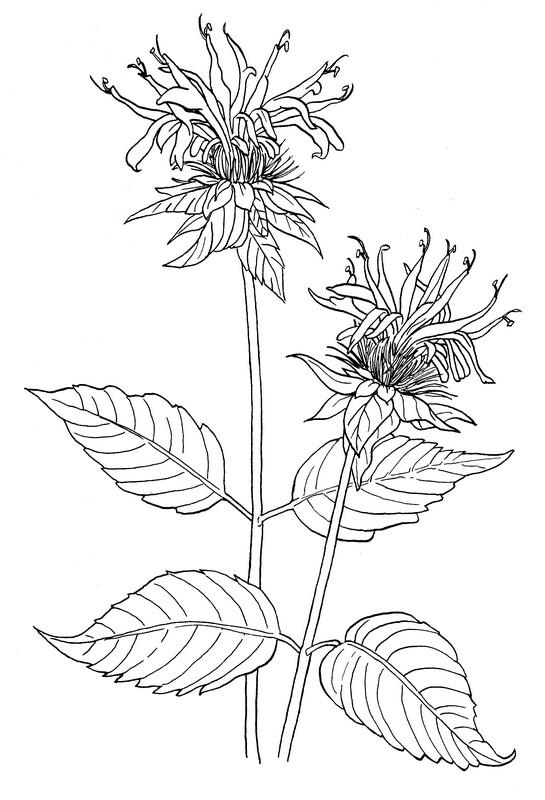
Bee Balm Coloring Page
-
Dancing
Dancing: the vertical expression of a horizontal desire legalized by music. ~George Bernard Shaw
-
Assessment & Evaluation
A friend commented that it might be hard to evaluate someone who could only move their hands/arms. Basically the same principles apply whether the movement is with legs through the space or being still with a posture, gesture, or moving the arms.
Arms and especially hands are the most common movement elements, feet and legs are next and of course not everybody can move everything so an assessment/evaluation is made with what you can get from a patient/client.
Of course an assessment is guided by the intention. If I want to know how someone is feeling and they are reluctant to share verbally I might ask them to express with their hands (which I often do at the hospital) if they are unclear how they are feeling and how to express that with their hands I might switch to a simple game with the intention of warming them up.
A warm up involving the hands could be tossing and catching a small stuffed animal and at some point adding words by answering easy questions like; my favorite food is “____”. If the person is nonverbal than you can interact with facial/postural/gestural expressions when tossing the animal and/or mirroring to interact and experience/create a response.
The assessment/evaluation happens when observing/witnessing the force and effort used to toss the cow and/or the facial, posture, gesture. Does the effort change during the session and how is that change related to the activity. For instance people will typically have smaller movements to start out with and as they become more comfortable their movements become larger. This happens whether the person is moving by feet/wheels through the space, or sitting tossing something or making gestures or changing their posture. I look at the whole body and don’t just observe/witness the active bits but also what the rest of the body is doing during the activity. For example is there a slight movement in the foot when tossing and is that from an old injury or a current muscle tightness or is it an emotional based issue.
If something comes up in a session that seems like it needs further exploration I might engage the client/patient in an activity that focuses on that “something”. If the left foot turns I might ask the person to focus on their feet when they toss or to make a sound. Or I might simply mention that I noticed you always turn your foot when you toss the stuffed animal and see what response the client/patient has.
The fun and useful part about being a Dance Movement Therapist is that you get to use verbal counseling skills and body counseling skills. The entire person is given a chance/opportunity to express with all of themselves, body and mind.
-
Yellow jacket Coloring Page

-
Kestenberg Movement Profile: Tension Flow Rhythms
KMP Movement Analysis is the comprehensive system for identifying psychological, developmental, emotional, cognitive and global health/imbalance through movement observation, notation and interpretation.
If the mind, emotions, and body are a closely integrated , mutually interacting system, then it is reasonable that we should be able to gain information about the mind by observing the body. The body and its manner of moving not only reveals aspects of current feelings and emotions, but can give us insight into an individual’s past. As Loman and Foley wrote in 1996, “…experiences get stored in the body and are reflected in body movement.” A person who feels rejected may develop a hollow, narrowed body attitude which expresses and reinforces such feelings throughout life. Because both physical and emotional experiences leave long term traces upon the way people hold themselves and move, the study of movement opens a door to the study of patterns of early development, coping strategies and personality configurations. -
Mandala 2 Coloring Page
-
Glutamate levels in the brain may be linked to alcohol craving
Craving consists of cognitive, emotional, and behavioral elements related to a desire to drink alcohol, and can be experienced during intoxication, withdrawal, and/or prior to relapse. Different types of craving are hypothesized to be associated with different neurotransmitter systems. For example, reward craving may be mediated by dopamine and opioids, obsessive craving by serotonin, and relief craving by glutamate. This study used magnetic resonance spectroscopy (1H-MRS) to examine the correlation between craving and glutamate levels in the left dorsolateral prefrontal cortex (LDLPFC) of patients with alcohol use disorders (AUDs).
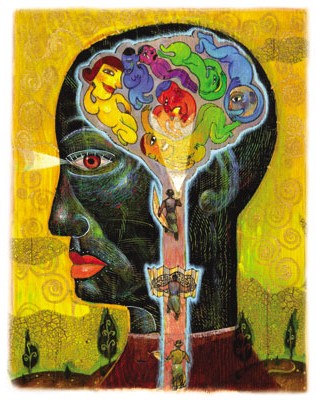
Fourteen participants (8 females, 6 males) underwent 1H-MRS to measure glutamate levels in the LDLPFC. Researchers also used the Pennsylvania Alcohol Craving Scale (PACS) and a research-validated interview method to quantify craving for alcohol and drinking patterns, respectively.
Although the study sample is small, these data suggest that glutamate levels in the LDLPFC are associated with alcohol-craving intensity in patients with AUDs. Glutamate spectroscopy may be able to help identify biological measures of alcohol-craving intensity and help with treatment interventions.
- Mark A. Frye, David J. Hinton, Victor M. Karpyak, Joanna M. Biernacka, Lee J. Gunderson, Jennifer Geske, Scott E. Feeder, Doo-Sup Choi, John D. Port. Elevated Glutamate Levels in the Left Dorsolateral Prefrontal Cortex Are Associated with Higher Cravings for Alcohol. Alcoholism: Clinical and Experimental Research, 2016; DOI: 10.1111/acer.13131
-
White Buffalo Womyn Coloring Page


 CreativeTherapyTools