
-
Left-right side brain test part II
It seems that lots of folks have emailed me about all sorts of other left/right side brain tests/quizzes online. Here are the top 3 tests.
Hemispheric Dominance Inventory Test: This test has 18 questions and you choice between 2 answers. I like the questions they seem interesting and thought provoking.
Right Brain vs Left Brain Creativity Test: This test of 54 questions is multiple choice with 4 choices and all of the questions are on one page like the test above. Some repeating of questions, which is fairly standard in personality type tests.
Brain Test Left and Right: This test has 20 questions each on a separate page, which means lots of chances to expose the visitor to ugly, distracting, blinking ads. I did like the fact that some questions are about shapes, very different than the other tests.
-
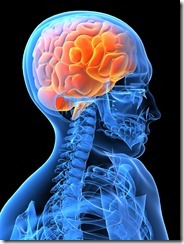
Left-right side brain test
Do you know what the attributes of your right and left sides of your brain? Listed below are the common elements of left and right brain hemisphere’s. Plus go here to take the left/right side brain test to see which side may be dominant.
Left Hemisphere – Rational
Responds to verbal instructions
Problem solves by logically and sequentially looking at the parts of things
Looks at differences
Is planned and structured
Prefers established, certain information
Prefers talking and writing
Prefers multiple choice tests
Controls feelings
Prefers ranked authority structuresRight Hemisphere – Intuitive
Responds to demonstrated instructions
Problem solves with hunches, looking for patterns and configurations
Looks at similarities
Is fluid and spontaneous
Prefers elusive, uncertain information
Prefers drawing and manipulating objects
Prefers open ended questions
Free with feelings
Prefers collegial authority structures -
Art and Asthma
The fear and anxiety associated with an asthma attack can last long after the attack has subsided. Now research, published online in the Journal of Allergy & Clinical Immunology, reports that the art therapy showed benefits both during the therapy and for months afterward. “Asthma impacts not only a child’s physical well-being but also has a considerable effect on a child’s quality of life and psychological development,” said Anya Beebe, MA, an art therapist at National Jewish Health. “Our study shows that art therapy for children with severe, chronic asthma is clearly beneficial. Our results were striking and persisted for months after treatment stopped.”
In art therapy, patients create artwork that helps express their feelings about an illness, a trauma or medical concerns. The artwork can then serve as a starting point for discussions about these issues. Researchers believe that creating art helps participants establish distance between themselves and their medical concerns. They learn to understand that they have a personal identity outside of their illness. It is believed to be particularly effective with children because they often do not have the adult capabilities to verbally articulate their emotions, perceptions, or beliefs, and often can more comfortably convey ideas in ways other than talking.
You can read more at the National Jewish Health website.
-
Meditation and Pain
Meditation can relieve pain, and it does so by activating multiple brain areas, according to an April 2011 study in the Journal of Neuroscience. Fadel Zeidan of Wake Forest University and his colleagues scanned people’s brains as they received uncomfortably hot touches to the leg. When subjects practiced a mindful meditation technique that encourages detachment from experience while focusing on breathing, they reported less
 pain than when they simply paid attention to their breathing. Likewise, different patterns of brain activity emerged under the two conditions, with mindful meditating resulting in more activity not only in executive centers that evaluate experiences and regulate emotions but also in lower regions that control the signals coming from the body.
 The volunteers learned the meditation technique in only four 20-minute sessions, which means this pill-free analgesia could be a feasible way to help real patients suffering from pain. “People can reap some of the benefits of meditation without extensive training,” Zeidan says.
When I work with patients using mindfulness I start by asking who has experience with any type of meditation, breathing techniques and/or relaxation exercises. We than have a brief explanation and question and answer period and I focus on removing any doubt, fear, or skepticism. I usually than do a 10 to 12 minute body scan moving right into a mindful meditation that focuses on the breath.
With the co-occurring patients I work with this process seems to work the best. The chat in the beginning warms people up, the body scan relaxes which helps the meditators enter into a more meditative state.


 CreativeTherapyTools