
-
Cardinal-Coloring Page

-
Setting boundaries
Setting boundaries is an essential skill in life, especially for people in recovery. Addicts often grow up in dysfunctional homes, where boundaries were either too rigid (leading to suppressed emotions or distant relationships) or too enmeshed (depriving them of a sense of personal identity). Later in life, their interpersonal relationships may continue to be defined by old roles and patterns, increasing the risk of depression, anxiety and addictive or compulsive behaviors.
As part of recovery, addicts learn how to set boundaries and to respect other people’s boundaries in return. In the addiction field, treatment providers often refer to this process as embracing the authentic self. While it may sound like psychobabble, it is really a process of discovering who you want to be, how you want to interact with other people, and taking responsibility for the consequences of your choices.
Why are boundaries important? They keep you safe from being manipulated, abused or taken advantage of, while also protecting other people from harm you may consciously or unconsciously inflict. They prevent both parties in a relationship from blurring the lines between self and others, which can lead to enmeshment and codependency. With healthy boundaries in place, you can begin to tune in to your inner voice and trust your own thoughts and feelings, and then communicate those to other people.
Distinguishing Healthy and Unhealthy Boundaries
Without a healthy role model, it can be difficult to know what healthy boundaries look like. First, let’s cover what healthy boundaries are not. They are not threats or attempts to control or manipulate others into doing what you want. They are not rigid rules or “walls” designed to keep people out or shield you from expressing your emotions.
Healthy boundaries are simply a delineation of what type of treatment is acceptable to you, and what consequences will result from violating a boundary. People with healthy boundaries share their thoughts and feelings, take care of their own needs, and are able to say no when necessary.
By contrast, people with weak boundaries often:
• Sacrifice their personal values, plans or goals to please others
• Allow others to define who they are and make decisions for them
• Expect others to fulfill all their needs
• Feel guilty when they say no
• Hesitate to share their opinions or assert themselves if they are being treated unfairly
• Frequently feel used, threatened, victimized or mistreated by others
• Frequently offer unsolicited advice, or feel pressured to follow someone else’s advice
• Take responsibility for other people’s feelings
• Tell others how to think, feel or act
A Boundary-Setting Roadmap
Every individual is called upon to set their own boundaries. What works for some may seem either too intrusive or too distant to others. When laying out your boundaries, work through the following steps:
Create a Personal Bill of Rights. Before you can start setting boundaries, you have to recognize your right to have your own feelings, values and beliefs and to express to others how you want to be treated. For some, this requires a colossal leap in self-worth.
Identify Your Emotions. Our parents always admonish us to “think before you act.” When you have a strong response, take a time-out to identify the underlying emotion and figure out what you want to convey. Doing so allows you to interact with other people in an honest, direct way rather than blaming or lashing out.
Set Limits. Once you have a few guidelines in place for how you expect to be treated, practice setting limits with people in a clear, direct way. Examples of healthy boundaries are: “I choose to be around sober people” or “I’ll be happy to talk with you when your voice is calm.”
Assert Your Needs. If you feel that your boundaries are being violated, speak up. This doesn’t mean lashing out or blaming others, but rather assertively communicating your needs. Ask for what you want and say no, politely yet firmly, if something isn’t right for you.
Listen to Your Instincts. If a situation feels uncomfortable or inappropriate, chances are a boundary is being pushed. By tuning into your instincts, you’re more likely to respond in ways that are true to your authentic self.
Defend Your Boundaries. Once you set boundaries, expect that they will be tested. Before this happens, set consequences that you are willing and able to enforce (e.g., “If you continue this behavior, I will…”). Know that by setting limits, you may disappoint the other person, especially if they have weak boundaries themselves. While you should always act with dignity and respect, you can’t control other people’s feelings and behaviors.
If someone continually violates your boundaries, you may need to minimize contact with them, or if they are toxic to your recovery, cut ties altogether. By choosing not to let people violate your boundaries, you stop being the victim, stop blaming others and start reclaiming responsibility for your own life.
Respect Other People’s Boundaries. Just as important as honoring your own boundaries is respecting other people’s, even if they are different from yours. If they don’t have defined boundaries, show them the respect you know they deserve anyway.
-
Havana Brown-Coloring Page

-
Meditation and Pain Management
Meditation can relieve pain, and it does so by activating multiple brain areas, according to an April 2011 study in the Journal of Neuroscience. Fadel Zeidan of Wake Forest University and his colleagues scanned people’s brains as they received uncomfortably hot touches to the leg. When subjects practiced a mindful meditation technique that encourages detachment from experience while focusing on breathing, they reported less
 pain than when they simply paid attention to their breathing. Likewise, different patterns of brain activity emerged under the two conditions, with mindful meditating resulting in more activity not only in executive centers that evaluate experiences and regulate emotions but also in lower regions that control the signals coming from the body.
The volunteers learned the meditation technique in only four 20-minute sessions, which means this pill-free analgesia could be a feasible way to help real patients suffering from pain. “People can reap some of the benefits of meditation without extensive training,” Zeidan says.
When I work with patients using mindfulness I start by asking who has experience with any type of meditation, breathing techniques and/or relaxation exercises. We than have a brief explanation and question and answer period and I focus on removing any doubt, fear, or skepticism. I usually than do a 10 to 12 minute body scan moving right into a mindful meditation that focuses on the breath.
With the co-occurring patients I work with this process seems to work the best. The chat in the beginning warms people up, the body scan relaxes which helps the meditators enter into a more meditative state.
-
Old English Sheepdog-Coloring Page

-
Transformation of the Ordinary
Dance/movement therapy (DMT) can be an avenue for creating a symbolic transformation of individual, or community experience. DMT can use the same characteristics of weight, balance, and dynamics as everyday actions such as walking, working, playing, or communication. Out of our everyday and ordinary motor activities, DMT can select, heighten or subdue, gestures/postures and body movement to achieve something which transcends the ordinary.
For instance, as a teen I learned a West African Maize Dance from the
 Arthur Hall African American Dance company. This dance uses the movements of planting, tending, and harvesting of maize as the core elements of the dance. Taking these agrarian movements and enacting them outside of their usual context begins the process of symbolic transformation. As the movements are performed an element of artistic quality begins to emerge and becomes evident in the transitional movements that occur between planting, tending, and harvesting. This Maize Dance combines the ordinary with the extra ordinary; taking the everyday actions and ritualizing them in a way that expresses and celebrates an important aspect of West African culture.
Symbolic transformation can take place on an individual level as well. Once, working with a client an opportunity arose to explore the bodily expression of sadness; i.e. What are you doing/feeling physically when you are sad? The client took the ordinary movements/gestures/postures of their sadness and made them bigger and smaller, connecting, un-connecting and reconnecting them as they slowly evolved into a pattern. As this client continued with their exploration a transformation occurred and new movements, suggestive of another feeling emerged. Asking the client to add words to their exploration of the new movements provided a clearer understanding of sadness.
Enacting movements/postures/gestures outside of their usual context allows the possibility of experiencing in way that can be more; objective and subjective. Making bigger and smaller, connecting and reconnecting, movement and feelings emerge uncensored, allowing a different understanding of the original feeling and all that surrounds it. The therapeutic process of dance movement therapy can guide the mover as they explore, uncovering the extraordinary in the ordinary.
-
Great Laurel-Coloring Page

-
Patterns of Self Talk
Patterns of negative or positive self-talk often start in childhood. Usually, the self-talk habit is one that’s colored our thinking for years, and can affect us in many ways, influencing the experience of stress to our lives. However, any time can be a good time to change it! Here are some ways you can stop yourself from using negative self-talk and use your mind to boost your productivity and self-esteem, and relieve stress.

Twin Babies in Diapers — Image by © Royalty-Free/Corbis
Notice Your Patterns:
The first step toward change is to become more aware of the problem. You probably don’t realize how often you say negative things in your head, or how much it affects your experience. Here are two strategies that can help you become more conscious of your internal dialogue and its content.
Journal Writing: Whether you carry a journal around with you and jot down negative comments when you think them, write a general summary of your thoughts at the end of the day, or just start writing about your feelings on a certain topic and later go back to analyze it for content, journaling can be an effective tool for examining your inner process.
Thought-Stopping: As you notice yourself saying something negative in your mind, you can stop your thought mid-stream my saying to yourself “Stop”. Saying this aloud will be more powerful, and having to say it aloud will make you more aware of how many times you are stopping negative thoughts, and where.
-
Black Widow Spider-Coloring Page

-
Art and brain science
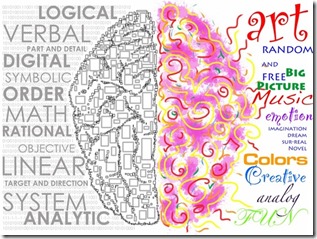
Here is an interesting article from the NYT about the brain and art from a professor of brain science at Columbia University.:
…… The portraiture that flourished in Vienna at the turn of the 20th century is a good place to start. Not only does this modernist school hold a prominent place in the history of art, it consists of just three major artists — Gustav Klimt, Oskar Kokoschka and Egon Schiele — which makes it easier to study in depth.
As a group, these artists sought to depict the unconscious, instinctual strivings of the people in their portraits, but each painter developed a distinctive way of using facial expressions and hand and body gestures to
 communicate those mental processes.
Their efforts to get at the truth beneath the appearance of an individual both paralleled and were influenced by similar efforts at the time in the fields of biology and psychoanalysis. Thus the portraits of the modernists in the period known as “Vienna 1900” offer a great example of how artistic, psychological and scientific insights can enrich one another.
The idea that truth lies beneath the surface derives from Carl von Rokitansky, a gifted pathologist who was dean of the Vienna School of Medicine in the middle of the 19th century. Baron von Rokitansky compared what his clinician colleague Josef Skoda heard and saw at the bedsides of his patients with autopsy findings after their deaths. This systematic correlation of clinical and pathological findings taught them that only by going deep below the skin could they understand the nature of illness.
I’ve read many a book and chatted with art therapists about the psychological process involved in art and art making and this article comes from a different perspective; brain science.



 CreativeTherapyTools