
With this handout I usually had folks write in the category areas what worked for them, what didn’t work, and what will work in the future.
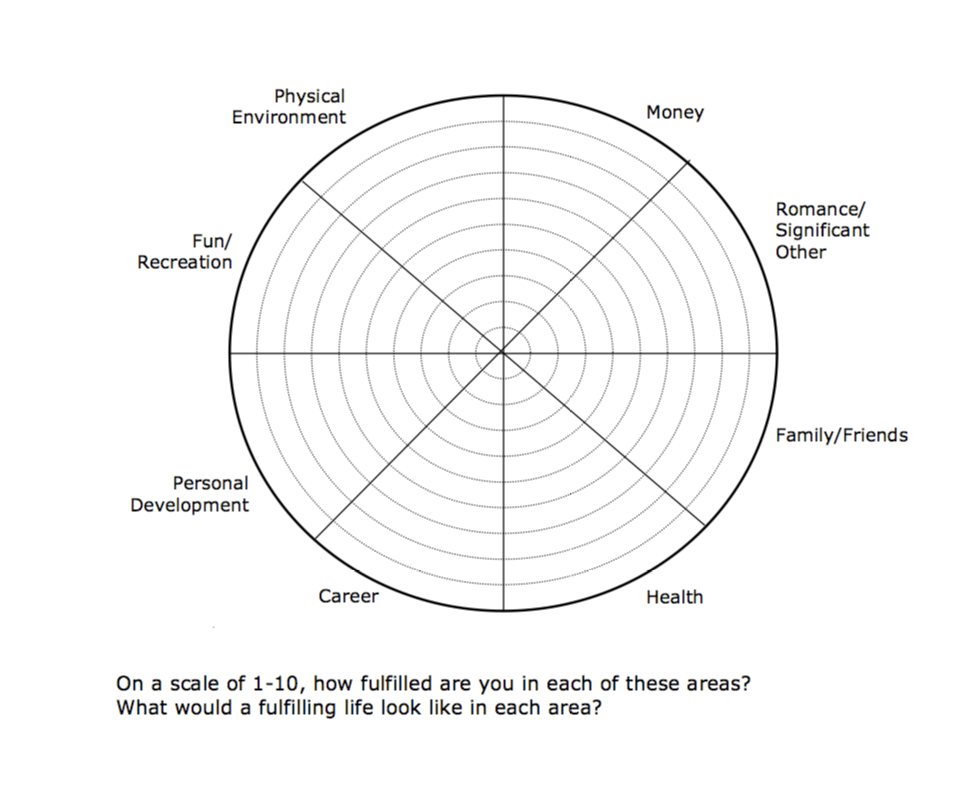
With this handout I usually had folks write in the category areas what worked for them, what didn’t work, and what will work in the future.
I considered all of my groups to be basically about coping skills. This handout is for a self esteem group that usually generated engagement.
Positive Statements about you
1. I like myself because:
2. I’m an expert at:
3. I feel good about:
4. My friends would tell you I have a great:
5. My favorite place is:
6. I’m loved by:
7. People say I am a good:
8. I’ve been told I have:
The human body has a finite number of resources, and scientists are always discovering more about how these resources are shared, depleted, and replenished. Now a new study suggests that the areas in your brain responsible for self-control and forming memories are closely linked – in other words, if you’re concentrating hard on staying disciplined, you’re probably becoming less adept at remembering what’s happening.

Researchers Yu-Chin Chiu and Tobias Egner from Duke University in the US asked a group of volunteers to recognize a series of faces, both with and without the inclusion of a self-control test in the middle. They found that having to exercise self-control had a negative impact on the participants’ ability to recall which pictures they’d previously seen. The same experiment was then repeated with a new set of volunteers and brain-scanning fMRI (functional magnetic resonance imaging) equipment on hand.
The pair discovered that one area of the brain – the ventrolateral prefrontal cortex – was activated frequently during the self-control test and predicted the strength of the volunteers’ memory later on. The findings suggest that self-control and memory compete for the same resources inside the brain and support the theory that inhibiting ourselves can also cause us to forget more easily.
“The control demands of response inhibition divert attention away from stimulus encoding, thereby weakening memory traces for inhibitory cues,” the researchers conclude in The Journal of Neurosience. “These findings shed new light on the relation between the control process of response inhibition and the cognitive domains of perception, attention, and memory.”
The self-control test used was a traditional Go/No-Go task: these tasks work by asking participants to view a series of items and push a button only when certain criteria are met – in the case of this experiment, when the face shown is male rather than female. The theory is that those who are able to hold back from a button push when necessary are those with the strongest self-control (or “response inhibition”, as neuroscientists like to call it). The participants were not told in advance that they would need to remember the faces they were shown.
“The scans revealed that responding to a cue and inhibiting a response produced overlapping activation patterns in brain regions within the right frontal and parietal lobes, a network that has previously been implicated in response inhibition,” Mo Costrandi reports for The Guardian. “Crucially, ‘no-go’ trials produced greater activation of this network than ‘Go’ trials, and activity in one specific brain region (the ventrolateral prefrontal cortex) predicted the strength of the participants’ memory, such that the greater the observed network activation, the more likely the participants were to forget that face later on.”
The researchers admit their theory is still “speculative” for now, but if further study confirms the link, they believe their discovery could be used to treat people who have problems with self-control: those suffering from ADHD (Attention Deficit Hyperactivity Disorder), for example, or some form of addiction.
One scenario put forward by the pair is having to suddenly cancel a lane change on the motorway because a car is already in the spot you want to move into. If they’re right, the act of having to control and inhibit your actions would make it less likely that you would remember the details of the incident – such as the make and model of the car that was blocking your path.
In my years of facilitating groups I have on occasion facilitated men only groups. One issue that comes up is depression. We all have bouts of sadness now and then and when those bouts of sadness interfere with our daily lives than we need to take a step in the direction of change. Below is part of a handout I often use, particularly with dual diagnosed men.
Symptoms of Depression
Not everyone who is depressed or manic experiences every symptom. Some people experience only a few; some people suffer many. The severity of symptoms varies among individuals and also over time.
· Persistent sad, anxious, or “empty” mood.
· Feelings of hopelessness or pessimism.
· Feelings of guilt, worthlessness, or helplessness.
· Loss of interest or pleasure in hobbies and activities that were once enjoyable
· Decreased energy, fatigue; feeling “slowed down.”
· Difficulty concentrating, remembering, or making decisions.
· Trouble sleeping, early-morning awakening, or oversleeping.
· Changes in appetite and/or weight.
· Thoughts of death or suicide, or suicide attempts.
· Restlessness or irritability.
· Persistent physical symptoms, such as headaches, digestive disorders, and chronic pain that do not respond to routine treatment.

Co-Occurrence of Depression with Other Illnesses
Depression can coexist with other illnesses. In such cases, it is important that the depression and each co-occurring illness be appropriately diagnosed and treated. Research has shown that anxiety disorders which include post-traumatic stress disorder (PTSD), obsessive-compulsive disorder, panic disorder, social phobia, and generalized anxiety disorder commonly accompany depression.
Substance use disorders (abuse or dependence) also frequently co-occur with depressive disorders. Research has revealed that people with drug and/or alcohol addiction are almost twice as likely to experience depression.
Depression has been found to occur at a higher rate among people who have other serious illnesses such as heart disease, stroke, cancer, HIV, diabetes, and Parkinson’s.
Causes of Depression
Very often, a combination of cognitive, genetic, and environmental factors is involved in the onset of depression. Modern brain-imaging technologies reveal that, in depression, neural circuits responsible for the regulation of moods, thinking, sleep, appetite, and behavior fail to function properly.
In some families, depressive disorders seem to occur generation after generation; however, they can also occur in people with no family history of these illnesses. Genetics research indicates that risk for depression results from the influence of specific multiple genes acting together with non-genetic factors.
Environmental factors such as trauma, loss of a loved one, a difficult relationship, financial problem, or any stressful change in life patterns, whether the change is unwelcome or desired, can trigger a depressive episode in vulnerable individuals. Once someone experiences a bout of depression later episodes of depression may occur without an obvious cause.
Men and Depression
Men are more likely than women to report alcohol and drug abuse or dependence in their lifetime; however, there is debate among researchers as to whether substance use is a “symptom” of underlying depression in men or a co-occurring condition that more commonly develops in men. Nevertheless, substance use can mask depression, making it harder to recognize depression as a separate illness that needs treatment.
Instead of acknowledging their feelings, asking for help, or seeking appropriate treatment, men may turn to alcohol or drugs when they are depressed, or become frustrated, discouraged, angry, irritable, and, sometimes, violently abusive. Some men deal with depression by throwing themselves compulsively into their work, attempting to hide their depression from themselves, family, and friends. Other men may respond to depression by engaging in reckless behavior, taking risks, and putting themselves in harm’s way.


