Groups

The lives of individuals are shaped, for better or worse, by their experiences in groups. People are born into groups. Throughout life, they join groups. They will influence and be influenced by family, religious, social, and cultural groups that constantly shape behavior, self-image, and both physical and mental health.

Groups can support individual members in times of pain and trouble, and they can help people grow in ways that are healthy and creative. However, groups also can support deviant behavior or influence an individual to act in ways that are unhealthy or destructive.

Because our need for human contact is biologically determined, we are, from the start, social creatures. This propensity to congregate is a powerful therapeutic tool. Formal therapy groups can be a compelling source of persuasion, stabilization, and support. Groups organized around therapeutic goals can enrich members with insight and guidance; and during times of crisis, groups can comfort and guide people who otherwise might be unhappy or lost. In the hands of a skilled, well-trained group leader, the potential curative forces inherent in a group can be harnessed and directed to foster healthy attachments, provide positive peer reinforcement, act as a forum for self-expression, and teach new social skills. In short, group therapy can provide a wide range of therapeutic services, comparable in efficacy to those delivered in individual therapy. In some cases, group therapy can be more beneficial than individual therapy.

Group therapy and addiction treatment are natural allies. One reason is that people who abuse substances often are more likely to remain abstinent and committed to recovery when treatment is provided in groups, apparently because of rewarding and therapeutic forces such as affiliation, confrontation, support, gratification, and identification. This capacity of group therapy to bond patients to treatment is an important asset because the greater the amount, quality, and duration of treatment, the better the client’s prognosis.

The effectiveness of group therapy in the treatment of substance abuse also can be attributed to the nature of addiction and several factors associated with it, including (but not limited to) depression, anxiety, isolation, denial, shame, temporary cognitive impairment, and character pathology (personality disorder, structural deficits, or an un-cohesive sense of self). Whether a person abuses substances or not, these problems often respond better to group treatment than to individual therapy. Group therapy is also effective because people are fundamentally relational creatures.

Posted in Therapy | Tagged | Leave a comment

Chalcedon Checkerspot Coloring Page

CPBF-Chalcedon Checkerspot-TR.jpg

Posted in Coloring Pages | Tagged , | Leave a comment

Types of Depression

Whether you’re a college student in the middle of a major slump, a new mom who can’t pinpoint why she’s feeling so glum, or a retiree grieving over the loss of a loved one, that question isn’t an easy one to answer.

But there’s one thing for sure: “It is much more than just a sad mood,” said Angelos Halaris, MD, a professor of psychiatry and medical director of adult psychiatry at the Loyola University Medical Center in Chicago. Symptoms may include everything from hopelessness and fatigue to physical pain. And just as symptoms vary from person to person, so do the actual diagnoses. The word depression is actually just an umbrella term for a number of different forms, from major depression to atypical depression to dysthymia.

The most common form of depression? Major depression. In fact, about 7 percent of the adult U.S. population has this debilitating mental health condition at any given time, according to the National Institute of Mental Health (NIMH).

If you’re experiencing major depression, you may feel and see symptoms of extreme sadness, hopelessness, lack of energy, irritability, trouble concentrating, changes in sleep or eating habits, feelings of guilt, physical pain, and thoughts of death or suicide — and for an official diagnosis, your symptoms must last for more than two weeks. In some instances, a person might only experience one episode of major depression, but the condition tends to recur throughout a person’s life.

The best treatment is usually with antidepressant medications, explained Dr. Halaris, but talk therapy may also be used to treat depression. And there’s good news: An estimated 80 to 90 percent of people with major depression respond well to treatment.

About 2 percent of the American population has a form of depression that’s less severe than major depression but is still very real — dysthymia.

Dysthymia is a type of depression that causes a low mood over a long period of time — perhaps for a year or more, explained Halaris. “People can function adequately, but not optimally.” Symptoms include sadness, trouble concentrating, fatigue, and changes in sleep habits and appetite.

This depression usually responds better to talk therapy than to medications, though some studies suggest that combining medication with talk therapy may lead to the greatest improvement. People with dysthymia may also be at risk for episodes of major depression.

A whopping 85 percent of new moms feel some sadness after their baby is born — but for up to 16 percent of women, that sadness is serious enough to be diagnosable.

Postpartum depression is characterized by feelings of extreme sadness, fatigue, loneliness, hopelessness, suicidal thoughts, fears about hurting the baby, and feelings of disconnect from the child. It can occur anywhere from weeks to months after childbirth, and Halaris explained it most always develops within a year after a woman has given birth.

“It needs prompt and experienced medical care,” he said — and that may include a combination of talk and drug therapy.

Would you prefer to hibernate during the winter than face those cold, dreary days? Do you tend to gain weight, feel blue, and withdraw socially during the season?

You could be one of 4 to 6 percent of people in the United States estimated to have seasonal affective disorder, or SAD. Though many people find themselves in winter funks, SAD is characterized by symptoms of anxiety, increased irritability, daytime fatigue, and weight gain. This form of depression typically occurs in winter climates, likely due to the lessening of natural sunlight. “We don’t really know why some people are more sensitive to this reduction in light,” said Halaris. “But symptoms are usually mild, though they can be severe.”

This depression usually starts in early winter and lifts in the spring, and it can be treated with light therapy or artificial light treatment.

Despite its name, atypical depression is not unusual. In fact, it may be one of the most common types of depression — and some doctors even believe it is underdiagnosed.

“This type of depression is less well understood than major depression,” explained Halaris. Unlike major depression, a common sign of atypical depression is a sense of heaviness in the arms and legs — like a form of paralysis. However, a study published in the Archives of General Psychiatry (now known as JAMA Psychiatry) found that oversleeping and overeating are the two most important symptoms for diagnosing atypical depression. People with the condition may also gain weight, be irritable, and have relationship problems.

Some studies show that talk therapy works well to treat this kind of depression.

Psychosis — a mental state characterized by false beliefs, known as delusions, or false sights or sounds, known as hallucinations — doesn’t typically get associated with depression. But according to the National Alliance on Mental Illness, about 20 percent of people with depression have episodes so severe that they see or hear things that are not there.

“People with this psychotic depression may become catatonic, not speak, or not leave their bed,” explained Halaris. Treatment may require a combination of antidepressant and antipsychotic medications. A review of 10 studies concluded that it may be best to start with an antidepressant drug alone and then add an antipsychotic drug if needed. Another review, however, found the combination of medications was more effective than either drug alone in treating psychotic depression.

If your periods of extreme lows are followed by periods of extreme highs, you could have bipolar disorder (sometimes called manic depressive disorder because symptoms can alternate between mania and depression).

Symptoms of mania include high energy, excitement, racing thoughts, and poor judgment. “Symptoms may cycle between depression and mania a few times per year or much more rapidly,” Halaris said. “This disorder affects about 2 to 3 percent of the population and has one of the highest risks for suicide.” Bipolar disorder has four basic subtypes: bipolar I (characterized by at least one manic episode); bipolar II (characterized by hypomanic episodes — which are milder — along with depression); cyclothymic disorder; and other specified bipolar and related disorder.

People with bipolar disorder are typically treated with drugs called mood stabilizers.

Premenstrual dysphoric disorder, or PMDD, is a type of depression that affects women during the second half of their menstrual cycles. Symptoms include depression, anxiety, and mood swings. Unlike premenstrual syndrome (PMS), which affects up to 85 percent of women and has milder symptoms, PMDD affects about 5 percent of women and is much more severe.

“PMDD can be severe enough to affect a woman’s relationships and her ability to function normally when symptoms are active,” said Halaris. Treatment may include a combination of depression drugs as well as talk and nutrition therapies.

Also called adjustment disorder, situational depression is triggered by a stressful or life-changing event, such as job loss, the death of a loved one, trauma — even a bad breakup.

Situational depression is about three times more common than major depression, and medications are rarely needed — that’s because it tends to clear up over time once the event has ended. However, that doesn’t mean it should be ignored: Symptoms of situational depression may include excessive sadness, worry, or nervousness, and if they don’t go away, they may become warning signs of major depression.

Posted in Brain, depression | Leave a comment

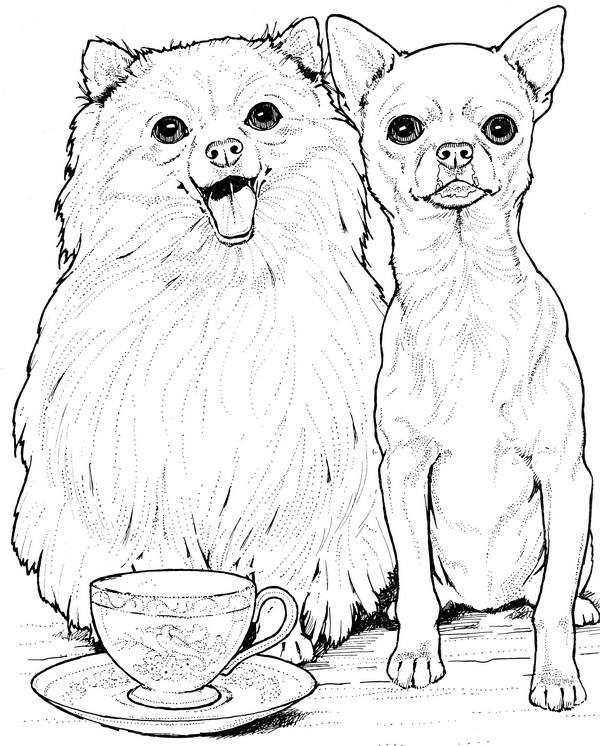
Pomeranian & Chiuahua Coloring Page

CPDG-Pomeranian & Chiuahua-TR.jpg

Posted in Coloring Pages | Tagged | Leave a comment

Emotional Intelligence

I often work with groups using lists. In creative arts therapy as well as educational and process oriented groups lists are a great framework to explore thoughts, and/or feelings. Here is a list that often comes up in groups: ten suggestions about feelings.

1. Become emotionally literate.

Label your feelings, rather than labeling people or situations.

Use three word sentences beginning with “I feel”.

“I feel impatient.” vs “This is ridiculous.” I feel hurt and bitter”. vs. “You are an insensitive jerk.”

“I feel afraid.” vs. “You are driving like an idiot.”

2. Distinguish between thoughts and feelings.

Thoughts: I feel like…& I feel as if…. & I feel that

Feelings: I feel: (feeling word)

3. Take more responsibility for your feelings.

“I feel jealous.” vs. “You are making me jealous.”

Analyze your own feelings rather than the action or motives of other people. 

Let your feelings help you identify your unmet emotional needs.

4. Use your feelings to help make decisions

“How will I feel if I do this?” “How will I feel if I don’t?”

“How do I feel?” “What would help me feel better?”

Ask others “How do you feel?” and “What would help you feel better?”

5. Use feelings to set and achieve goals

6. Feel energized, not angry.

Use what others call “anger” to help feel energized to take productive action.

7. Validate other people’s feelings.

Show empathy, understanding, and acceptance of other people’s feelings.

8. Use feelings to help show respect for others.

How will you feel if I do this? How will you feel if I don’t? Then listen and take their feelings into consideration.

9. Don’t advise, command, control, criticize, judge or lecture to others.

Instead, try to just listen with empathy and non-judgment.

10. Avoid people who invalidate you. While this is not always possible, at least try to spend less time with them, or try not to let them have psychological power over you.

Posted in Coping Skills | Tagged | Leave a comment

Tiphiid Wasp Coloring Page

CPIT-5 banded Tiphiid Wasp-TR.jpg

Posted in Coloring Pages | Tagged , | Leave a comment

Addictive habits and the brain

The notion that “one size fits all” when applying drug treatments to addiction is challenged by a published in the journal Biological Psychiatry that investigates pharmacotherapies for cocaine addiction.

Currently, medication for drug addicts is prescribed in the same way for all patients, regardless of the extent of their addiction. The new study uses cocaine addiction – for which there are currently no Food and Drug Administration (FDA)-approved drug therapies – to study whether treatment is more or less responsive at different stages of addiction.

Increasingly, evidence suggests that addiction is caused by a convergence of different “neurobiological adaptations” that result in an eventual loss of control over drug-seeking behaviors. Cocaine, for instance, impairs the processes that govern impulse control but also promotes drug-seeking habits.

The adaptations within the brain triggered by addictive drugs include reduced metabolic activity and reduced production of dopamine – the hormone that controls the brain’s reward and pleasure centers.

At some point, over the course of addiction, a brain region called the nucleus accumbens takes over from the dorsolateral striatum (DLS) in managing control behaviors – systems that are both involved in the production of dopamine. As the nucleus accumbens is responsible for processing reward and the DLS is involved in habits, this shift results in a behavior change that favors high impulsivity and compulsive drug seeking.

To study how the DLS, impulsivity and phase of addiction of a subject influence their responsiveness to drug interventions, the researchers behind the new study – from the University of Cambridge in the UK – conducted an experiment in an animal model.

The rats that were in an early phase of addiction were not affected by the treatment. Instead, it was the animals who had a longer history of self-administering cocaine that exhibited the greatest change in behavior.

First, the “impulsivity” of 40 male rats was measured using a task in which rats were trained to self-administer food pellets by pushing open a panel during allocated periods signaled to the rats using a light.

Next, these rats were trained to press a lever to self-administer cocaine dissolved in water. The extent to which the rats exhibited cocaine-seeking behavior – for instance, repeatedly pressing the lever, even when cocaine was not delivered – was monitored by the researchers.

The team then administered a dopamine receptor-blocking drug called α-flupenthixol directly into the DLS of rats at various phases of addiction.

Also, the rats that were in an early phase of addiction were not affected by the treatment. Instead, it was the animals that had a longer history of self-administering cocaine that exhibited the greatest change in behavior.

Dr. John Krystal, editor of Biological Psychiatry, says the results show that dopamine receptor blockers play a role in treatment of addiction, but only at particular phases of the addiction process.

“The notion that particular brain mechanisms are engaged only at particular phases of the addiction process strikes me as an important insight that has yet to be harnessed in developing new medications for addiction treatment,” he says.

“The results of this study are important because they show that although both impulsive and non-impulsive rats developed cocaine-seeking habits, this was delayed in high impulsive rats,” adds first author Dr. Jennifer Murray. She continues:

“It is suggested that vulnerability to addiction conferred by impulsivity is less influenced by the propensity to develop drug-seeking habits and more by the inability of an individual to regain control over these habits that are rigidly and maladaptively established in the brain.”

Posted in Addiction, Brain | Tagged | Leave a comment