
-
Arts appear to play role in brain development
Brain research in the past several years is just beginning to uncover some startling ideas about how students learn. First came the proof, some years ago, that our brains do not lose brain cells as we get older, but are always capable of growing.
Now neuroscientists are investigating how training students in the arts may change the structure of their brains and the way they think. They are asking: Does putting a violin in the hands of an elementary school student help him to do math better? Will learning to dance or paint improve a child’s spacial ability or ability to learn to read?
Research in those areas, Harvard professor Jerome Kagan said, is “as deserving of a clinical trial as a drug for cancer that has not yet been shown to be effective.”

There aren’t many conclusions yet that can be translated into the classroom, but there is an emerging interdisciplinary field between education and neuroscience. Like Hopkins, Harvard also has created a center to study learning and the brain.
Much of the research into the arts has centered on music and the brain. One researcher studying students who go to an arts high school found a correlation between those who were trained in music and their ability to do geometry. Yet another four-year study, being conducted by Ellen Winner of Boston College and Gottfried Schlaug of Harvard, is looking at the effects playing the piano or the violin has on students who are in elementary school.
Winner said she was quite skeptical of claims that schools that had introduced the arts had seen an increase in test scores and a generally better school climate. She had previously looked at those claims and found they couldn’t be backed up by research.
However, she is in the midst of a four-year study of elementary students that has shown some effects: One group is learning an instrument, and another is not. “It is the first study to demonstrate brain plasticity in young children related to music playing,” Schlaug said.
The study Winner is working on has shown that children who receive a small amount of training — as little as half an hour of lessons a week and 10 minutes of practice a day — do have structural changes in their brains that can be measured. And those students, Winner said, were better at tests that required them to use their fingers with dexterity.
About 15 months after the study began, students who played the instrument were not better at math or reading, although the researchers are questioning whether they have assessments that are sensitive enough to measure the changes. They will continue the study for several more years.
Charles Limb, a Johns Hopkins doctor and a jazz musician, studied jazz musicians by using imaging technology to take pictures of their brains as they improvised. He found that they allowed their creativity to flow by shutting down areas that regulated inhibition and self-control. So are the most creative people able to shut down those areas of the brain?
Most of the new research is focusing on the networks of the brain that are involved in specific tasks, said Michael Posner, a researcher at the University of Oregon. Posner has studied the effects of music on attention. What he found, he said, was that in those students who showed motivation and creativity, training in the arts helped develop their attention and their intelligence. The next great focus in this area, he said, is on proving the connection that most scientists believe exists between the study of music and math ability.
The imaging is now so advanced that scientists can already see the difference in the brain networks of those who study a string instrument and those who study the piano intensely.
The brain research, while moving quickly by some measures, is still painfully slow for educators who would like answers today. Morgan, the Washington County schools chief, said some research did help her support the drive to build the Barbara Ingram School for the Arts in Hagerstown.
Mariale Hardiman, the former principal of Roland Park Elementary/Middle School, was once one of those principals who focused a lot of attention on reading and math scores. But she saw what integrating the arts into classrooms could do for students, she said, and she then began her own research into the subject.
She is now the co-director of the Hopkins Neuro-Education Initiative. She said there are a myriad of questions that could be answered in the research that is just starting, but there are two she would like to see approached: Do children who learn academic content through the arts tend to hold onto that knowledge longer? And are schools squeezing creativity out of children by controlling so much of their school day?
Even without research though, Kagan of Harvard said there is ample evidence of the value of an arts education because so many children who aren’t good at academics can gain self-confidence through the arts.
“The argument for an arts education is based not on sentimentality but on pragmatism,” he said. “If an arts program only helped the 7 million children in the bottom quartile, the dropout rate would drop.”
-
California Dogface Coloring Page

-
Irrational Beliefs Guide
Consider the following questions carefully. Reflectively answer each one briefly but completely regarding those people or things about which you are most emotionally disturbed. This assignment may be emotionally painful, but it may help you achieve needed insight so that you can end your pain.

- Who or what disturbs or upsets you?
- Who or what do you strongly believe should, ought, must, or have to be different?
- Who or what do you strongly think is or awful, terrible, horrible, or catastrophic?
- Who or what do you down, damn, condemn or believe is worthless?
- Who or what do you believe is absolutely needed, necessary, or required?
- What are the things you strongly believe are absolutes, extremes, or critically important?
- Who or what do you most often or most strongly complain about?
- What is your greatest wish that you believe you most likely won’t get?
- What goal have you made (even unconsciously) into a demand because you not only want to but have convinced yourself you must achieve it?
- What happened in your past from which you cannot recover?
- What things do you find are, too hard, too much, too painful, too upsetting, or that you just can’t stand?
- Who or what are you most likely to lose your temper over?
- What are the biggest stresses in your life?
- Who or what do you feel most helpless about?
- Who or what do you feel most hopeless about?
- What are your most strongly felt demands, wishes, or hopes?
- What insight or awareness have you come to because of this exercise?
-
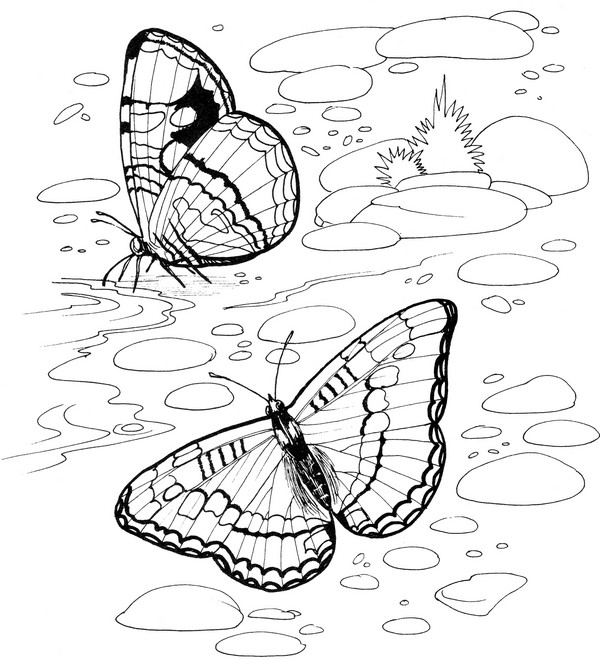
California Sister Coloring Page
-
Groups
The lives of individuals are shaped, for better or worse, by their experiences in groups. People are born into groups. Throughout life, they join groups. They will influence and be influenced by family, religious, social, and cultural groups that constantly shape behavior, self-image, and both physical and mental health.
Groups can support individual members in times of pain and trouble, and they can help people grow in ways that are healthy and creative. However, groups also can support deviant behavior or influence an individual to act in ways that are unhealthy or destructive.

Because our need for human contact is biologically determined, we are, from the start, social creatures. This propensity to congregate is a powerful therapeutic tool. Formal therapy groups can be a compelling source of persuasion, stabilization, and support. Groups organized around therapeutic goals can enrich members with insight and guidance; and during times of crisis, groups can comfort and guide people who otherwise might be unhappy or lost. In the hands of a skilled, well-trained group leader, the potential curative forces inherent in a group can be harnessed and directed to foster healthy attachments, provide positive peer reinforcement, act as a forum for self-expression, and teach new social skills. In short, group therapy can provide a wide range of therapeutic services, comparable in efficacy to those delivered in individual therapy. In some cases, group therapy can be more beneficial than individual therapy.
Group therapy and addiction treatment are natural allies. One reason is that people who abuse substances often are more likely to remain abstinent and committed to recovery when treatment is provided in groups, apparently because of rewarding and therapeutic forces such as affiliation, confrontation, support, gratification, and identification. This capacity of group therapy to bond patients to treatment is an important asset because the greater the amount, quality, and duration of treatment, the better the client’s prognosis.
The effectiveness of group therapy in the treatment of substance abuse also can be attributed to the nature of addiction and several factors associated with it, including (but not limited to) depression, anxiety, isolation, denial, shame, temporary cognitive impairment, and character pathology (personality disorder, structural deficits, or an un-cohesive sense of self). Whether a person abuses substances or not, these problems often respond better to group treatment than to individual therapy. Group therapy is also effective because people are fundamentally relational creatures.
-
Chalcedon Checkerspot Coloring Page

-
Types of Depression
Whether you’re a college student in the middle of a major slump, a new mom who can’t pinpoint why she’s feeling so glum, or a retiree grieving over the loss of a loved one, that question isn’t an easy one to answer.
But there’s one thing for sure: “It is much more than just a sad mood,” said Angelos Halaris, MD, a professor of psychiatry and medical director of adult psychiatry at the Loyola University Medical Center in Chicago. Symptoms may include everything from hopelessness and fatigue to physical pain. And just as symptoms vary from person to person, so do the actual diagnoses. The word depression is actually just an umbrella term for a number of different forms, from major depression to atypical depression to dysthymia.
The most common form of depression? Major depression. In fact, about 7 percent of the adult U.S. population has this debilitating mental health condition at any given time, according to the National Institute of Mental Health (NIMH).

If you’re experiencing major depression, you may feel and see symptoms of extreme sadness, hopelessness, lack of energy, irritability, trouble concentrating, changes in sleep or eating habits, feelings of guilt, physical pain, and thoughts of death or suicide — and for an official diagnosis, your symptoms must last for more than two weeks. In some instances, a person might only experience one episode of major depression, but the condition tends to recur throughout a person’s life.
The best treatment is usually with antidepressant medications, explained Dr. Halaris, but talk therapy may also be used to treat depression. And there’s good news: An estimated 80 to 90 percent of people with major depression respond well to treatment.
About 2 percent of the American population has a form of depression that’s less severe than major depression but is still very real — dysthymia.
Dysthymia is a type of depression that causes a low mood over a long period of time — perhaps for a year or more, explained Halaris. “People can function adequately, but not optimally.” Symptoms include sadness, trouble concentrating, fatigue, and changes in sleep habits and appetite.
This depression usually responds better to talk therapy than to medications, though some studies suggest that combining medication with talk therapy may lead to the greatest improvement. People with dysthymia may also be at risk for episodes of major depression.
A whopping 85 percent of new moms feel some sadness after their baby is born — but for up to 16 percent of women, that sadness is serious enough to be diagnosable.
Postpartum depression is characterized by feelings of extreme sadness, fatigue, loneliness, hopelessness, suicidal thoughts, fears about hurting the baby, and feelings of disconnect from the child. It can occur anywhere from weeks to months after childbirth, and Halaris explained it most always develops within a year after a woman has given birth.

“It needs prompt and experienced medical care,” he said — and that may include a combination of talk and drug therapy.
Would you prefer to hibernate during the winter than face those cold, dreary days? Do you tend to gain weight, feel blue, and withdraw socially during the season?
You could be one of 4 to 6 percent of people in the United States estimated to have seasonal affective disorder, or SAD. Though many people find themselves in winter funks, SAD is characterized by symptoms of anxiety, increased irritability, daytime fatigue, and weight gain. This form of depression typically occurs in winter climates, likely due to the lessening of natural sunlight. “We don’t really know why some people are more sensitive to this reduction in light,” said Halaris. “But symptoms are usually mild, though they can be severe.”
This depression usually starts in early winter and lifts in the spring, and it can be treated with light therapy or artificial light treatment.
Despite its name, atypical depression is not unusual. In fact, it may be one of the most common types of depression — and some doctors even believe it is underdiagnosed.
“This type of depression is less well understood than major depression,” explained Halaris. Unlike major depression, a common sign of atypical depression is a sense of heaviness in the arms and legs — like a form of paralysis. However, a study published in the Archives of General Psychiatry (now known as JAMA Psychiatry) found that oversleeping and overeating are the two most important symptoms for diagnosing atypical depression. People with the condition may also gain weight, be irritable, and have relationship problems.

Some studies show that talk therapy works well to treat this kind of depression.
Psychosis — a mental state characterized by false beliefs, known as delusions, or false sights or sounds, known as hallucinations — doesn’t typically get associated with depression. But according to the National Alliance on Mental Illness, about 20 percent of people with depression have episodes so severe that they see or hear things that are not there.
“People with this psychotic depression may become catatonic, not speak, or not leave their bed,” explained Halaris. Treatment may require a combination of antidepressant and antipsychotic medications. A review of 10 studies concluded that it may be best to start with an antidepressant drug alone and then add an antipsychotic drug if needed. Another review, however, found the combination of medications was more effective than either drug alone in treating psychotic depression.
If your periods of extreme lows are followed by periods of extreme highs, you could have bipolar disorder (sometimes called manic depressive disorder because symptoms can alternate between mania and depression).
Symptoms of mania include high energy, excitement, racing thoughts, and poor judgment. “Symptoms may cycle between depression and mania a few times per year or much more rapidly,” Halaris said. “This disorder affects about 2 to 3 percent of the population and has one of the highest risks for suicide.” Bipolar disorder has four basic subtypes: bipolar I (characterized by at least one manic episode); bipolar II (characterized by hypomanic episodes — which are milder — along with depression); cyclothymic disorder; and other specified bipolar and related disorder.
People with bipolar disorder are typically treated with drugs called mood stabilizers.
Premenstrual dysphoric disorder, or PMDD, is a type of depression that affects women during the second half of their menstrual cycles. Symptoms include depression, anxiety, and mood swings. Unlike premenstrual syndrome (PMS), which affects up to 85 percent of women and has milder symptoms, PMDD affects about 5 percent of women and is much more severe.
“PMDD can be severe enough to affect a woman’s relationships and her ability to function normally when symptoms are active,” said Halaris. Treatment may include a combination of depression drugs as well as talk and nutrition therapies.
Also called adjustment disorder, situational depression is triggered by a stressful or life-changing event, such as job loss, the death of a loved one, trauma — even a bad breakup.
Situational depression is about three times more common than major depression, and medications are rarely needed — that’s because it tends to clear up over time once the event has ended. However, that doesn’t mean it should be ignored: Symptoms of situational depression may include excessive sadness, worry, or nervousness, and if they don’t go away, they may become warning signs of major depression.
-
Pomeranian & Chiuahua Coloring Page

-
Emotional Intelligence
I often work with groups using lists. In creative arts therapy as well as educational and process oriented groups lists are a great framework to explore thoughts, and/or feelings. Here is a list that often comes up in groups: ten suggestions about feelings.
1. Become emotionally literate.
Label your feelings, rather than labeling people or situations.
Use three word sentences beginning with “I feel”.
“I feel impatient.” vs “This is ridiculous.” I feel hurt and bitter”. vs. “You are an insensitive jerk.”
“I feel afraid.” vs. “You are driving like an idiot.”
2. Distinguish between thoughts and feelings.
Thoughts: I feel like…& I feel as if…. & I feel that
Feelings: I feel: (feeling word)
3. Take more responsibility for your feelings.
“I feel jealous.” vs. “You are making me jealous.”
Analyze your own feelings rather than the action or motives of other people.
Let your feelings help you identify your unmet emotional needs.
4. Use your feelings to help make decisions
“How will I feel if I do this?” “How will I feel if I don’t?”
“How do I feel?” “What would help me feel better?”
Ask others “How do you feel?” and “What would help you feel better?”
5. Use feelings to set and achieve goals
6. Feel energized, not angry.
Use what others call “anger” to help feel energized to take productive action.
7. Validate other people’s feelings.
Show empathy, understanding, and acceptance of other people’s feelings.
8. Use feelings to help show respect for others.
How will you feel if I do this? How will you feel if I don’t? Then listen and take their feelings into consideration.
9. Don’t advise, command, control, criticize, judge or lecture to others.
Instead, try to just listen with empathy and non-judgment.
10. Avoid people who invalidate you. While this is not always possible, at least try to spend less time with them, or try not to let them have psychological power over you.
-
Tiphiid Wasp Coloring Page


 CreativeTherapyTools