
-
The community

“The community today can be no single tradition; it is the planet. Daily the world grows smaller, leaving understanding the only place where peace can find a home.” Huston Smith
-
Cognitive Distortions
A basic handout I have used with groups. Ideally I use handouts only to get a conversation going. The handout becomes a frame work for people to open up and start sharing.
Cognitive Distortions and Strategies to dispute them
- Personalizing: When you blame yourself entirely as the cause of something or blame someone else as the sole reason why something happens . “It’s my fault ” “It’s his/her fault.”
Strategy: Don’t look for blame. Find other causes. List other possibilities.
- All or nothing/black and white thinking: When you use extreme terms, “all”, “never”, “none”, “everybody”, “no one”. Also watch for “can’t”.
Strategy: Look for gray areas. Modify your language by substituting less extreme terms such as “some”, “often”, “most”.
- Catastrophizing: When you predict or expect the worst will happen.
Strategy: Expect more positive outcomes and possibilities.
- Should-ing: When you refer to (or rely on) your list of inflexible rules of acceptable behavior and believe you’re guilty or unworthy if you violate the rules. Or, when you get angry with others if they break the (your) rules. This results in “always having to be right “, or being “super human” or “perfect”.
Strategy: Change your language: “I should/must” to “I’d prefer” or “I’d rather”.
- Over-generalizing: When you make an overall assessment based on one example or incident.
Strategy: Remember that no one situation can exactly predict future outcomes. Look for individuality in each case. Remember that possibilities may exist that have not existed before by recognizing that you have the ability to change, and that things are always changing.
- Fallacy of fairness: When you expect things to work out based on some unseen system of “karma”, balance, morality, payback, justice, or what “should be fair”.
Strategy: Change your expectations. There is no inherent system of fairness. Things can happen for no apparent reason.
- Labeling/Name calling: When you attach powerful words or labels to yourself or others as if those words describe you, or them, or the situation completely. “This day is terrible”, or I’m stupid”.
Strategy: Define the term, see if it is really accurate. Use only accurate terms. Avoid intense labeling and name-calling. Use less weighted, destructive or inflammatory words. Are you using a double standard? Are you judging yourself more harshly than others would judge you or than you would judge others?
- Emotional reasoning: When you use your emotions or feelings as proof of how things are. “I feel so sad; things must be hopeless”.
Strategy: Evaluate the evidence objectively. Feelings are not proof of how things are or will be. Recognize that emotions change.
- Mind-reading: When you know what others are thinking and why they act the way they do. Particularly, you “know” how people think and feel about you.
Strategy: Seek other explanations for why people behave the way they do. Don’t assume. Check it out. Ask for their thoughts, opinions and feedback. Remind yourself that you don’t know what they are thinking.
- Disqualifying the positive: When you devalue anything “good” in a particular situation in light of the “bad”.
Strategy: Make an accurate assessment. See that “negatives” or “shortcomings” don’t erase strengths and assets, but that these can co-exist.
- Comparing: When you measure yourself against others, focusing on their accomplishments and attributes, or when you compare yourself to your own ideal.
Strategy: One can’t compare apples and oranges. We’re all different with different qualities. We can usually find somebody who may be “better” in some way. So what? That doesn’t help. Focus on your own inherent worth and aspirations instead.

- Personalizing: When you blame yourself entirely as the cause of something or blame someone else as the sole reason why something happens . “It’s my fault ” “It’s his/her fault.”
-
small things

Do not wait for leaders; do it alone, person to person. Be faithful in small things because it is in them that your strength lies. Mother Teresa
-
Research Identifies How Stress Triggers Relapse
Recent research from Brown University could pave the way for new methods of treatment for those recovering from addiction. Researchers identified an exact brain region in rats where the neural steps leading to drug relapse take place, allowing them to block a crucial step in the process that leads to stress-induced relapse.
Prior research has established that acute stress can lead to drug abuse in vulnerable individuals and increase the risk of relapse in recovering addicts. But the exact way that stress triggers the neural processes leading to relapse is still not clearly understood. The Brown study provides new insights on how stress triggers drug abuse and could lead to more effective treatments for addiction.
According to the study, stress has significant effects on plasticity of the synapses on dopamine neurons in the ventral tegmental area (VTA), the brain region where the neural activities leading to a stress-induced drug relapse take place.
Stress activates kappa opioid receptors (KORs) in the VTA, and the researchers found that by blocking the KORs, they could prevent the rats from relapsing to cocaine use while under stress.
Published in the journal Neuron, the study shows blocking these receptors may be a critical step in preventing stress-related drug relapses in humans, as well. The chemical used to block the receptor, “nor-BMI,” may eventually be tested on humans, according to the study’s authors.

“If we understand how kappa opioid receptor antagonists are interfering with the reinstatement of drug seeking, we can target that process,” senior study author Julie Kauer said in a statement. “We’re at the point of coming to understand the processes and possible therapeutic targets. Remarkably, this has worked.”
Kauer noted that the study builds upon over a decade of research on how changes in brain synapses relate to behaviors like addiction. The advance is significant and could accelerate progress towards a medication for those struggling to recover from addiction.
“If we can figure out how not only stress, but the whole system works, then we’ll potentially have a way to tune it down in a person who needs that,” Kauer said.
-
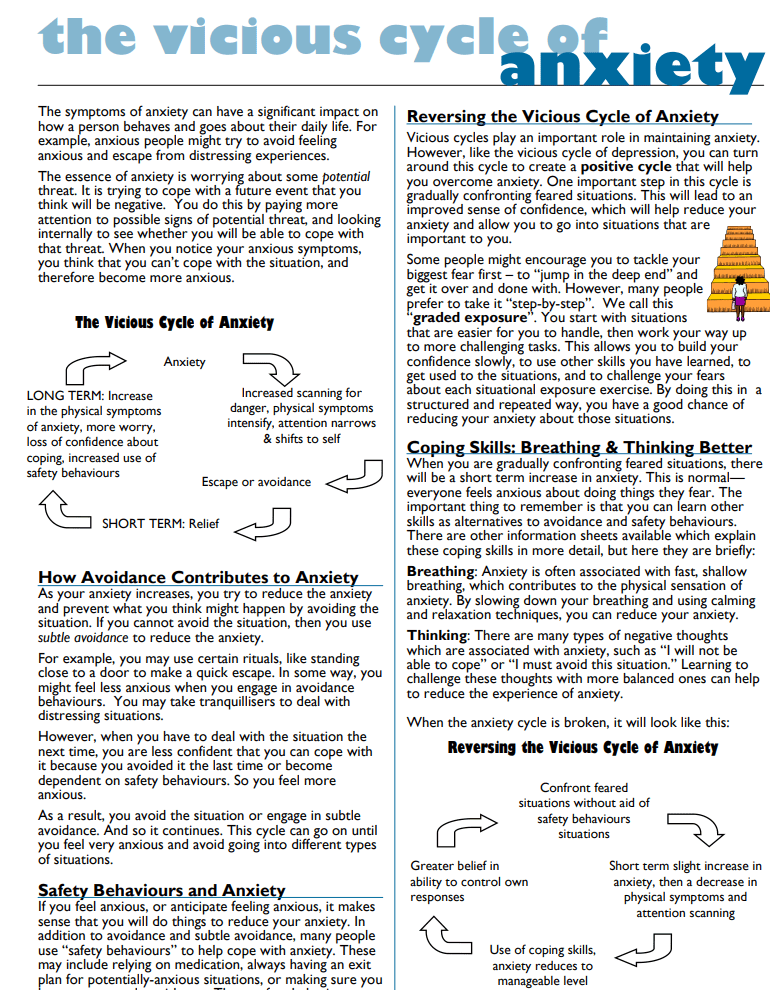
Cycle of Anxiety Handout
I usually used this handout with a guided relaxation after.
-
Mouse and Umbrella Coloring Page
-
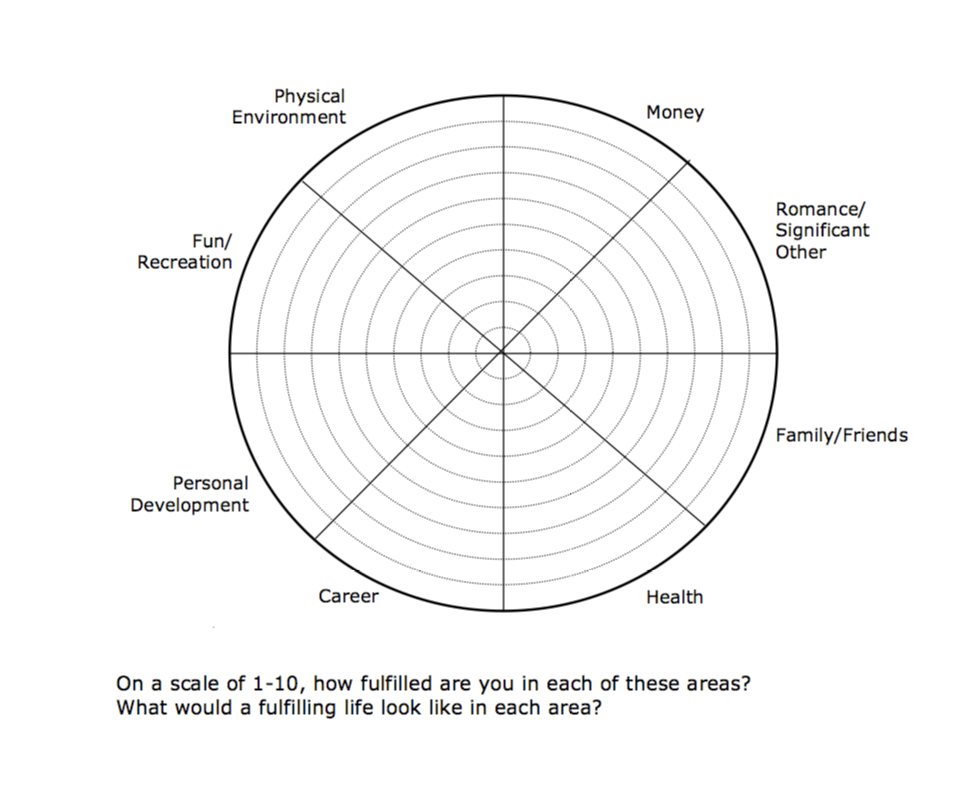
What works and will work for you handout
With this handout I usually had folks write in the category areas what worked for them, what didn’t work, and what will work in the future.
-
Goldfinch Coloring Page

-
Positive Statements Handout
I considered all of my groups to be basically about coping skills. This handout is for a self esteem group that usually generated engagement.
Positive Statements about you
1. I like myself because:
2. I’m an expert at:
3. I feel good about:
4. My friends would tell you I have a great:
5. My favorite place is:
6. I’m loved by:
7. People say I am a good:
8. I’ve been told I have:
-
Dogface Butterfly Coloring Page


 CreativeTherapyTools