
-
Breaking free | Stanford Medicine
-
Watch Revolutionary Trauma EXPERT, Dr. Peter A Levine
-
Marsh Marigold Coloring Page

-
Watch “Art Therapy in Action: Research” on YouTube
-
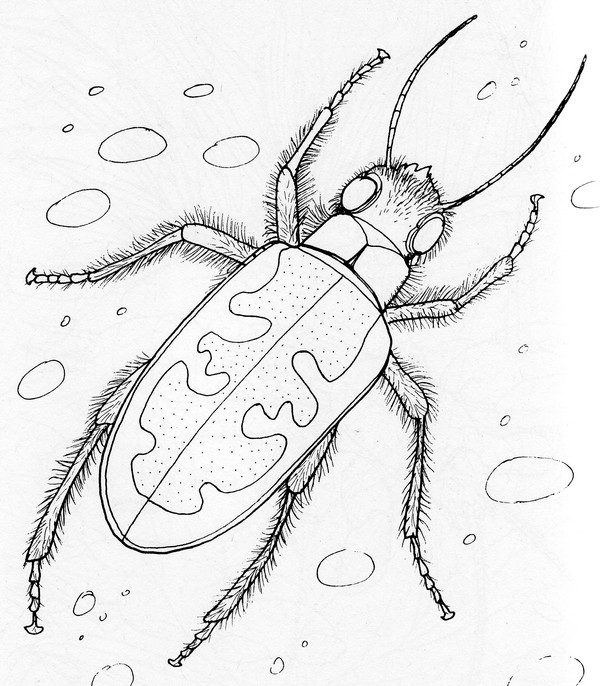
Tiger Beetle Coloring Page
-
Meditation Reduces Anxiety
Scientists at Wake Forest Baptist Medical Center have identified the brain functions involved in how meditation reduces anxiety.

The team wrote in the journal Social Cognitive and Affective Neuroscience about how they studied 15 healthy volunteers with normal levels of everyday anxiety. They said these individuals had no previous meditation experience or anxiety disorders.
The participants took four 20-minute classes to learn a technique known as mindfulness meditation. In this form of meditation, people are taught to focus on breath and body sensations and to non-judgmentally evaluate distracting thoughts and emotions.
“Although we´ve known that meditation can reduce anxiety, we hadn´t identified the specific brain mechanisms involved in relieving anxiety in healthy individuals,” said Dr. Fadel Zeidan, Ph.D., postdoctoral research fellow in neurobiology and anatomy at Wake Forest Baptist and lead author of the study. “In this study, we were able to see which areas of the brain were activated and which were deactivated during meditation-related anxiety relief.”
The researchers found that meditation reduced anxiety ratings by as much as 39 percent in the participants.
“This showed that just a few minutes of mindfulness meditation can help reduce normal everyday anxiety,” Zeidan said.
Fadel and colleagues were also able to reveal that meditation-related anxiety relief is associated with activation of the anterior cingulate cortex and ventromedial prefrontal cortex, which are areas of the brain involved with executive-level function.
“Mindfulness is premised on sustaining attention in the present moment and controlling the way we react to daily thoughts and feelings,” Zeidan said. “Interestingly, the present findings reveal that the brain regions associated with meditation-related anxiety relief are remarkably consistent with the principles of being mindful.”
He said the results of this neuroimaging experiment complement that body of knowledge by showing the brain mechanisms associated with meditation-related anxiety relief in healthy people.Scientists wrote in the journal
Scientists wrote in the journal
Frontiers in Human Neuroscience in November 2012 about how meditation has lasting emotional benefits. They found that participating in an eight-week meditation training program could have measurable effects on how the brain functions, even when someone is not actively meditating. The team used two forms of meditation training and saw some differences in the response of the amygdala, which is the part of the brain known to be important for emotion.
-
Goddess Diana Coloring Page

-
Movement Therapy
Dance movement therapy (DMT) is a form of psychotherapy that uses movement to improve a person’s physical, emotional, and mental well-being. It’s based on the idea that there’s a connection between our bodies and our minds, and that movement can be a way to express and explore our thoughts and feelings.
DMT can be used to help people with a variety of conditions, including:
* Mental health conditions such as anxiety, depression, and PTSD
* Physical health conditions such as chronic pain, Parkinson’s disease, and stroke
* Developmental disabilities such as autism spectrum disorder
In a DMT session, a therapist will typically use a variety of movement techniques, such as improvisation, mirroring, and guided imagery, to help the client explore their emotions and experiences. The therapist will also observe the client’s movement patterns, which can provide clues about their emotional state and coping mechanisms.
DMT can be an effective treatment for a variety of people, and it can be particularly helpful for those who find it difficult to express themselves verbally.
-
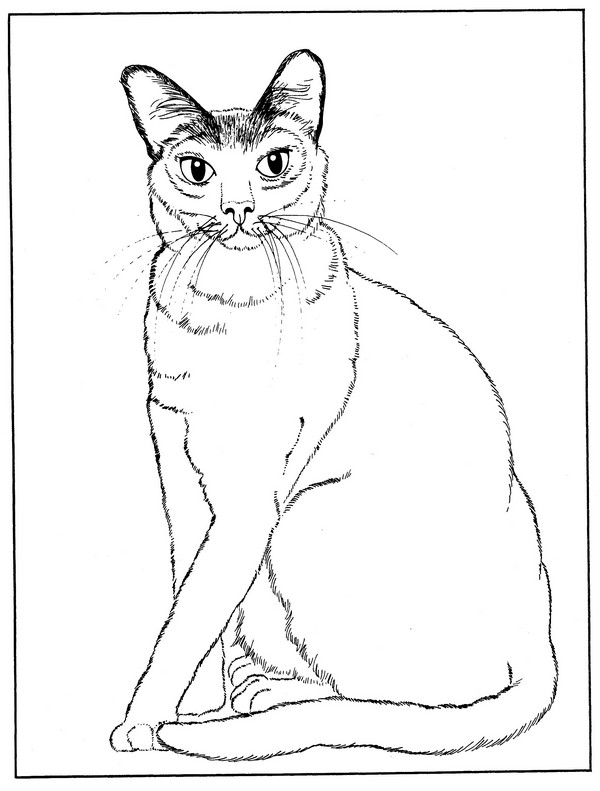
Tonkinese Coloring Page
-
Brain Differences Seen in Teen Drinkers
Teens who drink heavily appear to have significant abnormalities in brain development, a study published in the American Journal of Psychiatry.
Heavy drinking by teens may also be associated with a gene mutation linked to impulsiveness, according to another new study.
The brain regions examined in these studies play a critical role in the addiction cycle of binge drinking and preoccupation with drinking, George Koob, director of the U.S. National Institute on Alcohol Abuse and Alcoholism, said in an association news release.

In one study, brain scans of participants ages 12 to 24 found differences in brain development between heavy-drinking teens and those who didn’t drink. Heavy drinking ranged from having four drinks per occasion at least once a month to one or two drinks at least eight times per month.
Compared to non-drinking teens, the heavy drinkers had accelerated gray matter decline and smaller increases of white matter in the brain. The findings may help explain why heavy-drinking teens decline in school performance, said the researchers at the University of California, San Diego, and the Stanford Research Institute.
The other study included identical twin pairs in which one twin had drinking problems at ages 18 and 24 and the other twin did not. The researchers found that twins with drinking problems had altered DNA in a gene that plays a role in impulsiveness, which scientists labeled the PPMG1 gene.
The investigators then looked at 14-year-olds and found that similar changes in the PPMG1 gene were associated with higher impulsivity at age 14 and increased drinking over the next two years. Both impulsiveness and increased drinking at an early age are risk factors for drinking problems later in life.
“It is possible that such [genetic] changes, by increasing impulsivity, predispose adolescents to engage in excessive drinking and that the alterations in brain circuitry that follow excessive drinking, by disrupting executive function, make it harder to stop,” Koob wrote in an accompanying editorial.


