
-
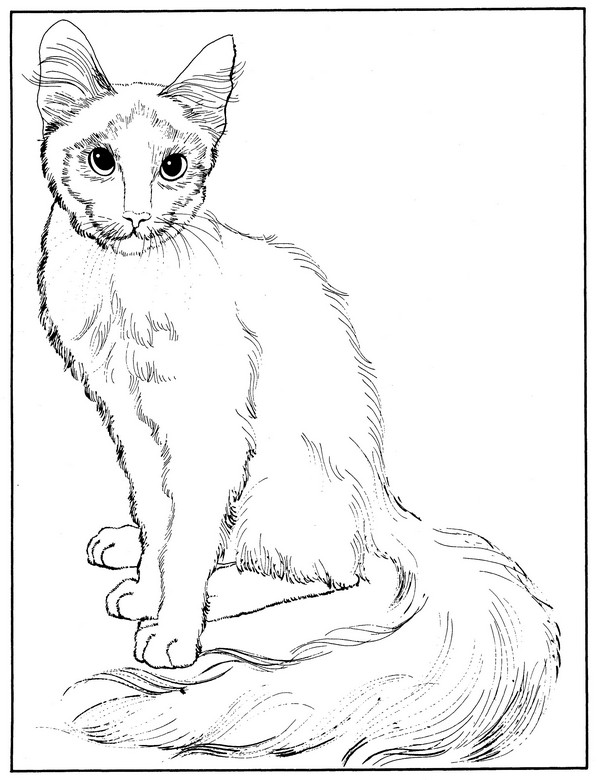
Coloring Page Balinese Cat
-
Art used to connect with dementia patients
Something happened when Brant Kingman handed his mother a colored pencil.
In the three years since Polly Penney, 87, was diagnosed with dementia, she had lost much of her short-term memory and some of her language. So she would ask Kingman the same question again, then again. Out of “absolute out-of-my-mind frustration,” Kingman, an artist, decided to try drawing together.
 Penney grew quiet. Her shoulders loosened. “It silenced her so we could sit together,” Kingman said. “And then every now and then, lucid thoughts would appear to her.”
Almost unintentionally, he tapped into a national trend: using art as therapy for people with Alzheimer’s disease and other forms of dementia. There are now art workshops for Alzheimer’s patients. Painting, poetry and pottery classes are tailored to dementia’s tics. Giving Voice Chorus, a pair of Twin Cities choirs for people with dementia, has created a tool kit so other cities might start their own.
Neurological disorders that attack memory and verbal communication can spare creativity, some research shows. In special cases, Alzheimer’s and frontotemporal dementia can even kick artistic ability into overdrive, said Dr. Bruce Miller, a neurologist at the University of California, San Francisco. If the disease attacks circuits on one side of the brain, he said, it might spark an interest or ability in the other side.
“It’s all about the geography,” said Miller, director of the university’s Memory and Aging Center. “It’s where the disease hits that is a determinant of what is lost — but sometimes what is gained.”
Partly because it offers another way to communicate, art therapy is “going to become, more and more, a regular part of how we look after people,” he said. MORE HERE
-
Coloring Page Bloodhound

-
A Journey Through the Mind of an Artist | Dustin Yellin | TED Talks
-
Coloring Page Goddess Arianrhod

-
VA arts program exhibit
Recently visitors to Microsoft’s flagship Manhattan store got a glimpse into the world of the American Veteran. Through the Eyes of a Veteran—a digital showcase and panel discussion held in December—represented the exhibit of the same name still currently on display at Snug Harbor Cultural Center, in Staten Island.

The Snug Harbor exhibit, features the works of about 75 Veteran artists originating from the Creative Arts Program at the VA New York Harbor Health Care System’s Brooklyn Campus.
Beryl Brenner, VA’s creative arts therapist for the creative arts program, and Snug Harbor’s director of performing arts, Larry Anderson, curated the exhibit.
Brenner, who has been introducing Veterans to the arts for 38 years—with 26 of those spent at VA—said the show at Snug Harbor “is a composite of years and years of work from the other shows they’ve done.”
Through the Eyes of a Veteran expresses a range of themes—from battling PTSD, to the different aspects of military environments both stateside and deployed—and also looks at Veterans through the lens of their individual portraits. MORE HERE
-
Coloring Page Borzoi Dog

-
The science of improving your brain’s creativity | Nick Skillicorn
-
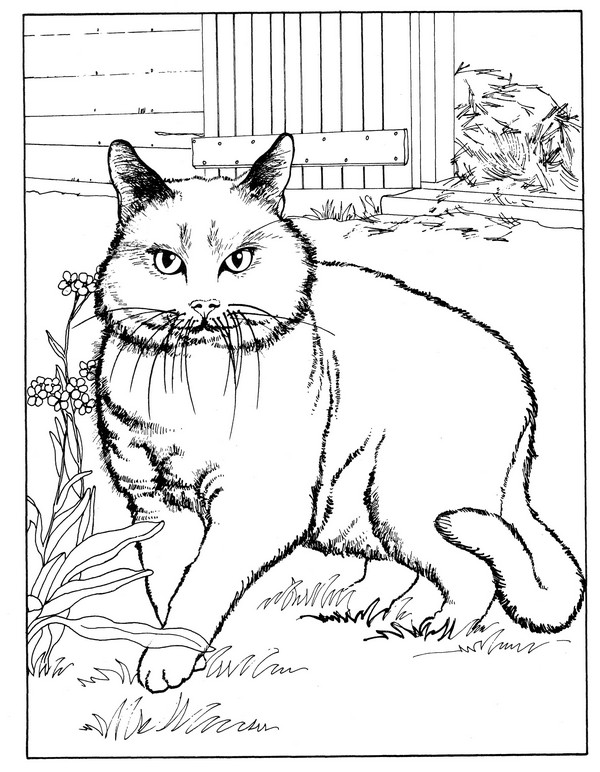
Coloring Page Chartreux Cat
-
creative thinking
When the task at hand requires some imagination, taking a walk may lead to more creative thinking than sitting, according to research published by the American Psychological Association.
“Many people anecdotally claim they do their best thinking when walking,” said Marily Oppezzo, PhD, of Santa Clara University. “With this study, we finally may be taking a step or two toward discovering why.”
While at Stanford University’s Graduate School of Education, Oppezzo and colleague Daniel L. Schwartz, PhD, conducted studies involving 176 people, mostly college students. They found that those who walked instead of sitting or being pushed in a wheelchair consistently gave more creative responses on tests commonly used to measure creative thinking, such as thinking of alternate uses for common objects and coming up with original analogies to capture complex ideas. When asked to solve problems with a single answer, however, the walkers fell slightly behind those who responded while sitting, according to the study published in APA’s Journal of Experimental Psychology: Learning, Memory and Cognition.

While previous research has shown that regular aerobic exercise may protect cognitive abilities, these researchers examined whether simply walking could temporarily improve some types of thinking, such as free-flowing thought compared to focused concentration. “Asking someone to take a 30-minute run to improve creativity at work would be an unpopular prescription for many people,” Schwartz said. “We wanted to see if a simple walk might lead to more free-flowing thoughts and more creativity.”
Of the students tested for creativity while walking, 100 percent came up with more creative ideas in one experiment, while 95 percent, 88 percent and 81 percent of the walker groups in the other experiments had more creative responses compared with when they were sitting. If a response was unique among all responses from the group, it was considered novel. Researchers also gauged a participant’s total number of responses and whether a response was feasible and appropriate to the constraints of the task. For example, “Putting lighter fluid in soup is novel, but it is not very appropriate,” Oppezzo said.
In one experiment with 48 participants, each student sat alone in a small room at a desk facing a blank wall. When a researcher named an object, the student came up with alternative ways to use the object. For example, for the word “button,” a person might say “as a doorknob on a dollhouse.” The students heard two sets of three words and had four minutes per set to come up with as many responses as possible. To see how walking might affect more restricted thinking, the researchers also had the students complete a word association task with 15 three-word groups, such as “cottage-Swiss-cake,” for which the correct answer is “cheese.” Participants repeated both tasks with different sets of words first while sitting and then while walking at a comfortable pace on a treadmill facing a blank wall in the same room.
With a different group of 48 students, some sat for two different sets of the tests, some walked during two sets of the test, and some walked and then sat for the tests. “This confirmed that the effect of walking during the second test set was not due to practice,” Oppezzo said. “Participants came up with fewer novel ideas when they sat for the second test set after walking during the first. However, they did perform better than the participants who sat for both sets of tests, so there was a residual effect of walking on creativity when people sat down afterward. Walking before a meeting that requires innovation may still be nearly as useful as walking during the meeting.”
Students who walked in another experiment doubled their number of novel responses compared with when they were sitting. The 40 students in this experiment were divided into three groups: One sat for two sets of tests but moved to separate rooms for each set; another sat and then walked on a treadmill; and one group walked outdoors along a predetermined path.

To see if walking was the source of creative inspiration rather than being outdoors, another experiment with 40 participants compared responses of students walking outside or inside on a treadmill with the responses of students being pushed in a wheelchair outside and sitting inside. Again, the students who walked, whether indoors or outside, came up with more creative responses than those either sitting inside or being pushed in a wheelchair outdoors. “While being outdoors has many cognitive benefits, walking appears to have a very specific benefit of improving creativity,” said Oppezzo.
More research will be necessary to explain how walking improves creativity, the authors said. They speculated that future studies would likely determine a complex pathway that extends from the physical act of walking to physiological changes to the cognitive control of imagination. “Incorporating physical activity into our lives is not only beneficial for our hearts but our brains as well. This research suggests an easy and productive way to weave it into certain work activities,” Oppezzo said.
Marily Oppezzo, Daniel L. Schwartz. Give your ideas some legs: The positive effect of walking on creative thinking.. Journal of Experimental Psychology: Learning, Memory, and Cognition, 2014; DOI:

 CreativeTherapyTools